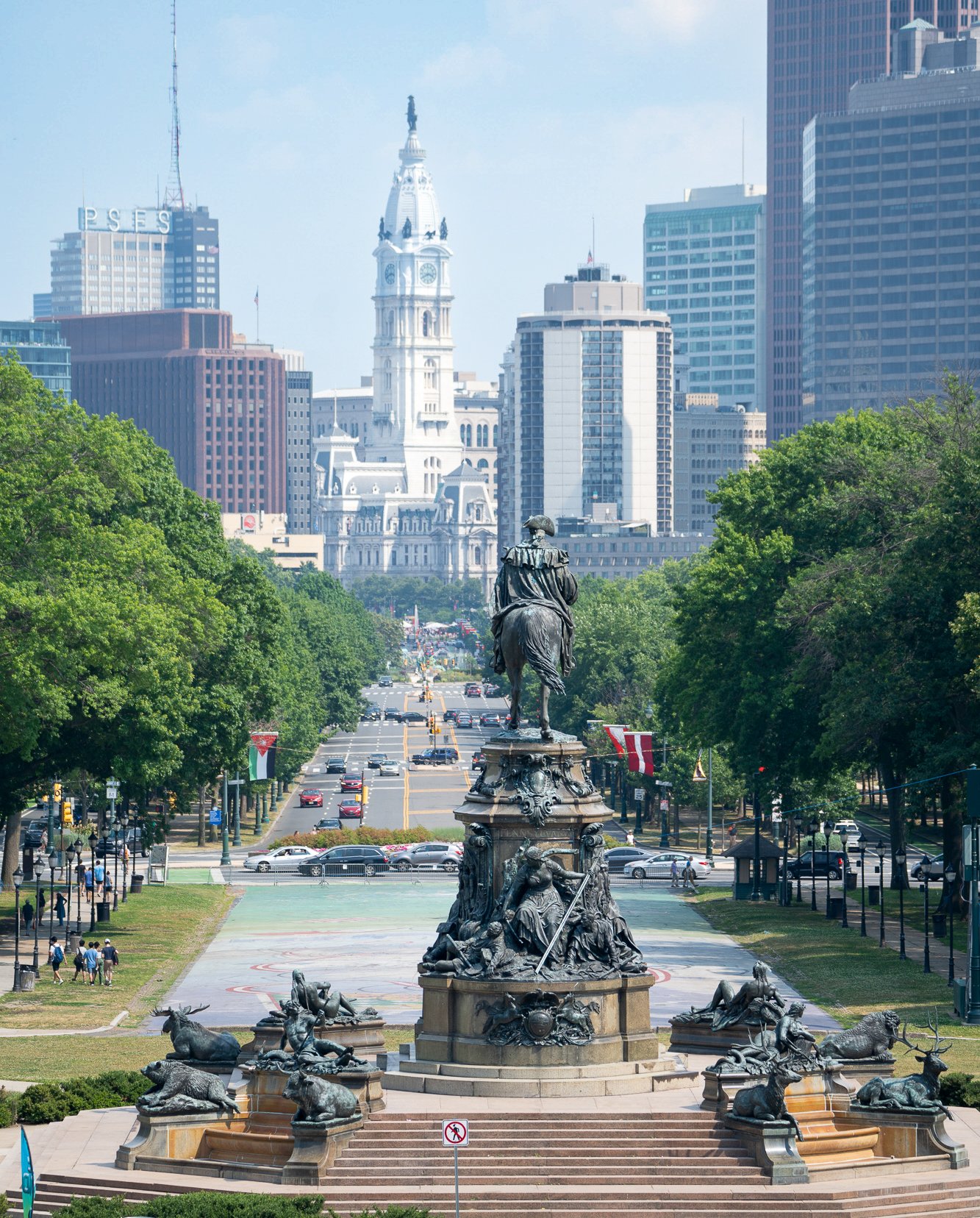
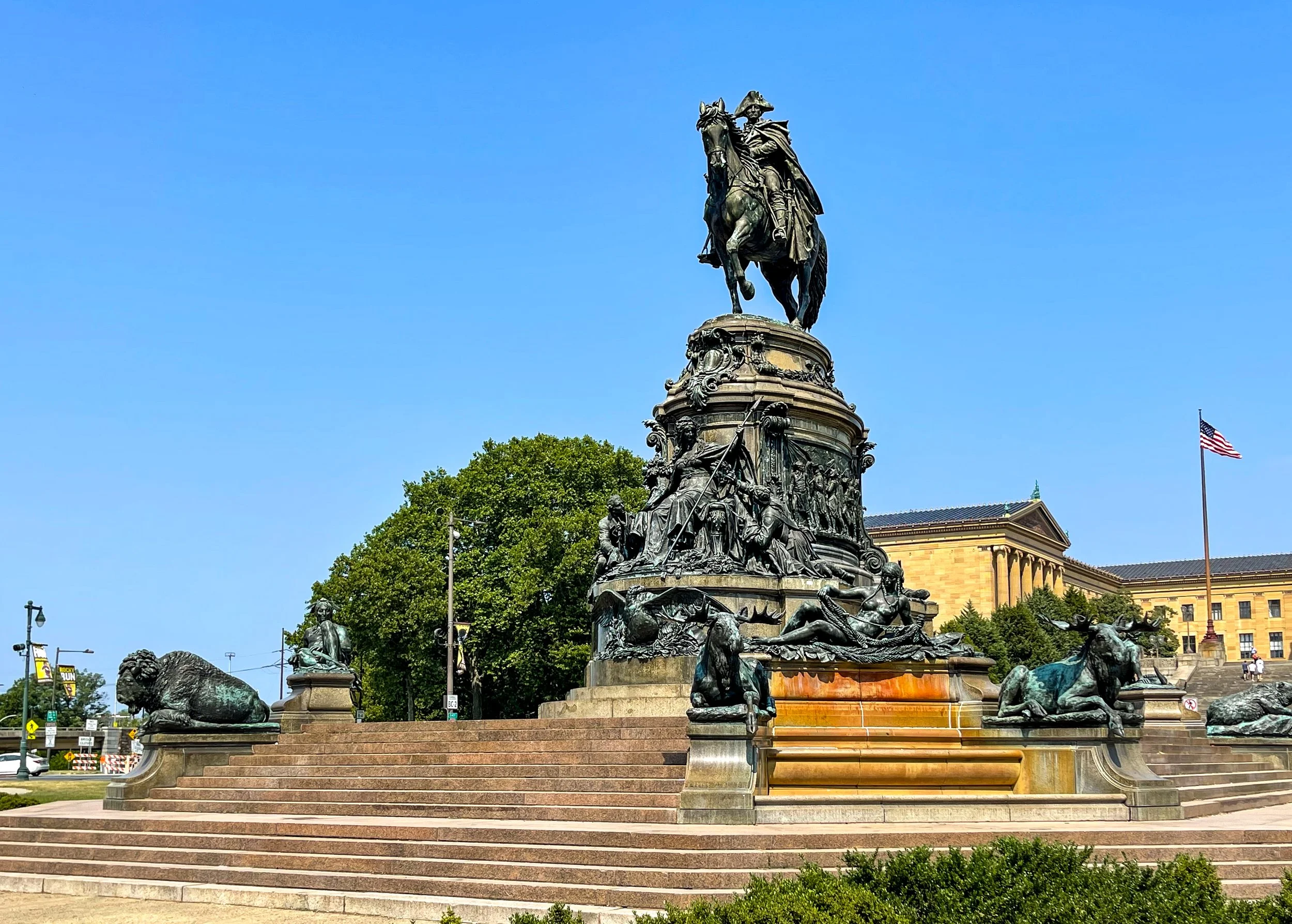
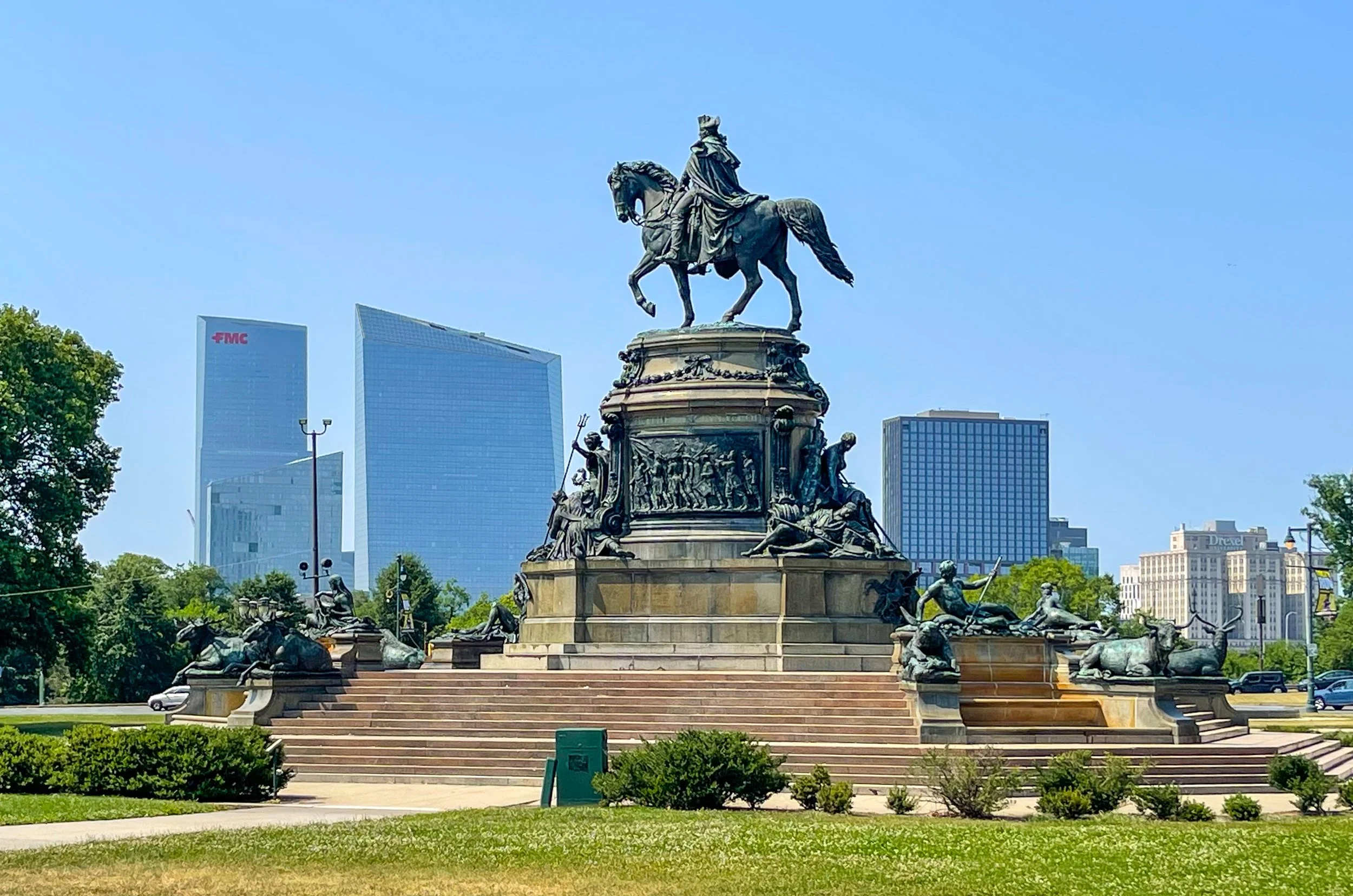
Walking to the Philadelphia Museum of Art after a train ride to the William H. Gray III 30th Street Station, I was struck by the scale of a monument rising 44 feet high from an open grassy plaza.
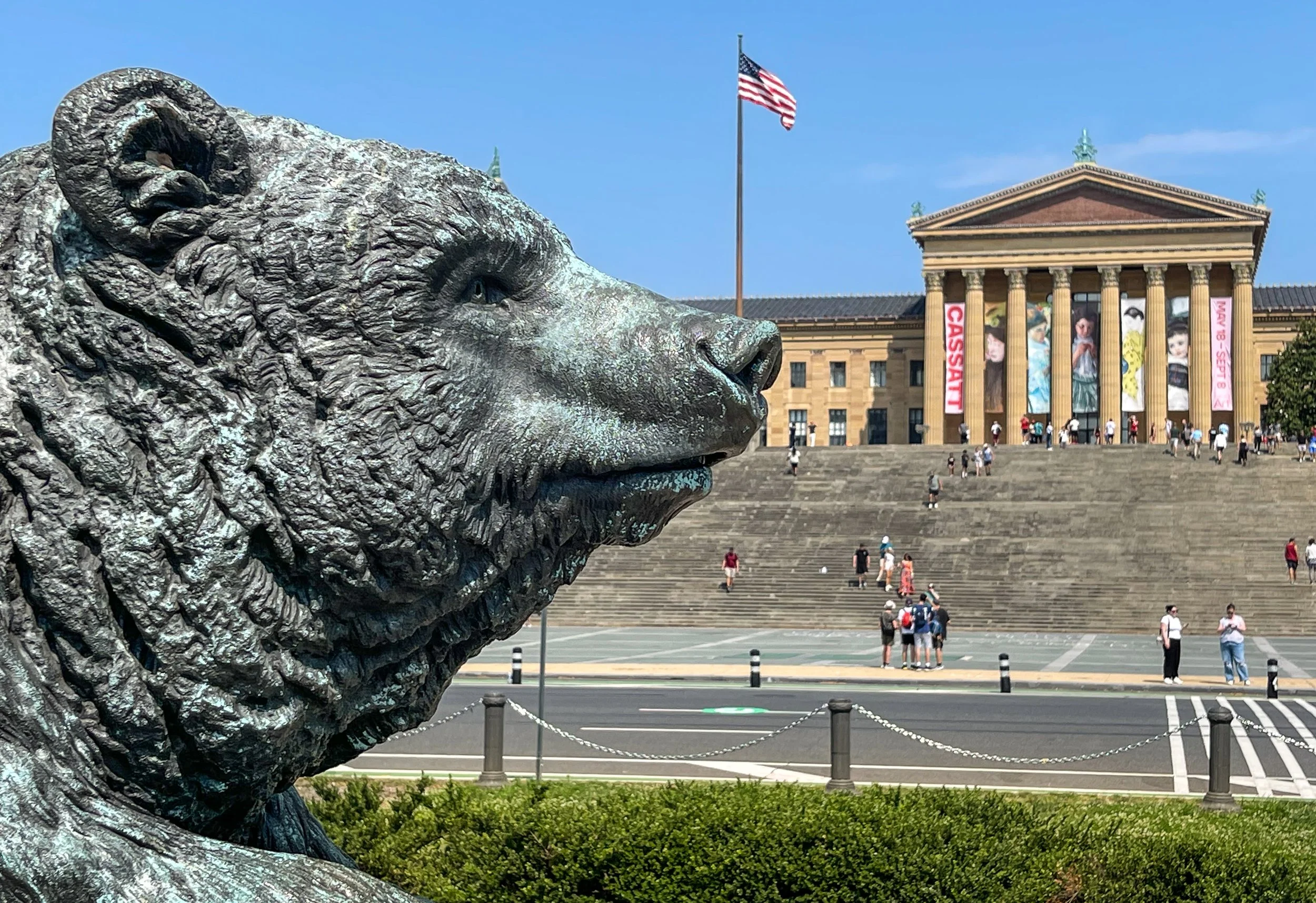
Concrete paths drew me to the multi-tiered bronze-and-granite artwork with multiple human and animal sculptures, crowned by an equestrian George Washington, in military cape and tricorn hat, as he peered down Benjamin Franklin Parkway. Surrounded by the 8-acre traffic roundabout Eakins Oval, this monument stood across from the museum's famous Rocky Steps and classical facade, providing an ideal backdrop for the photographs I started snapping.
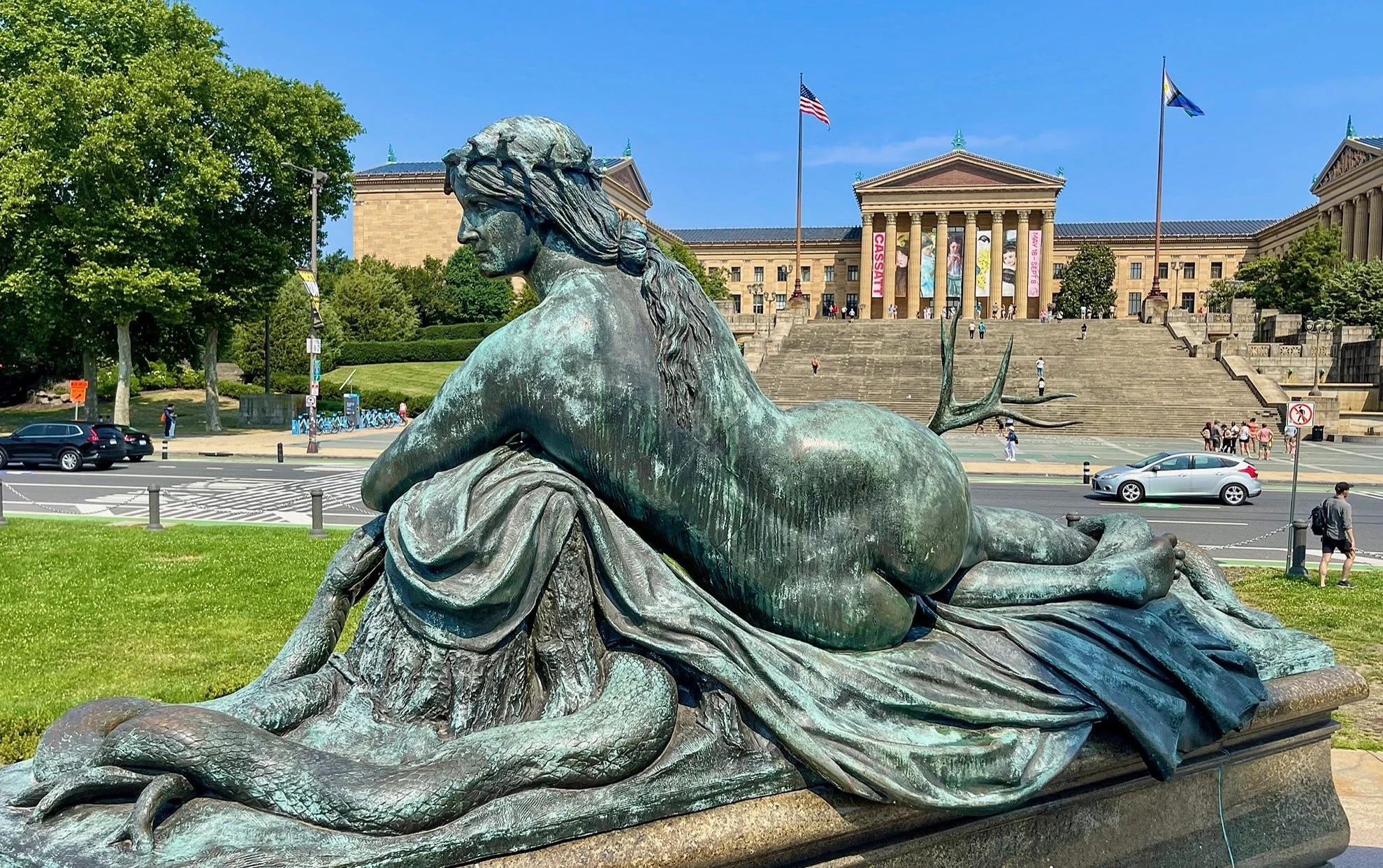
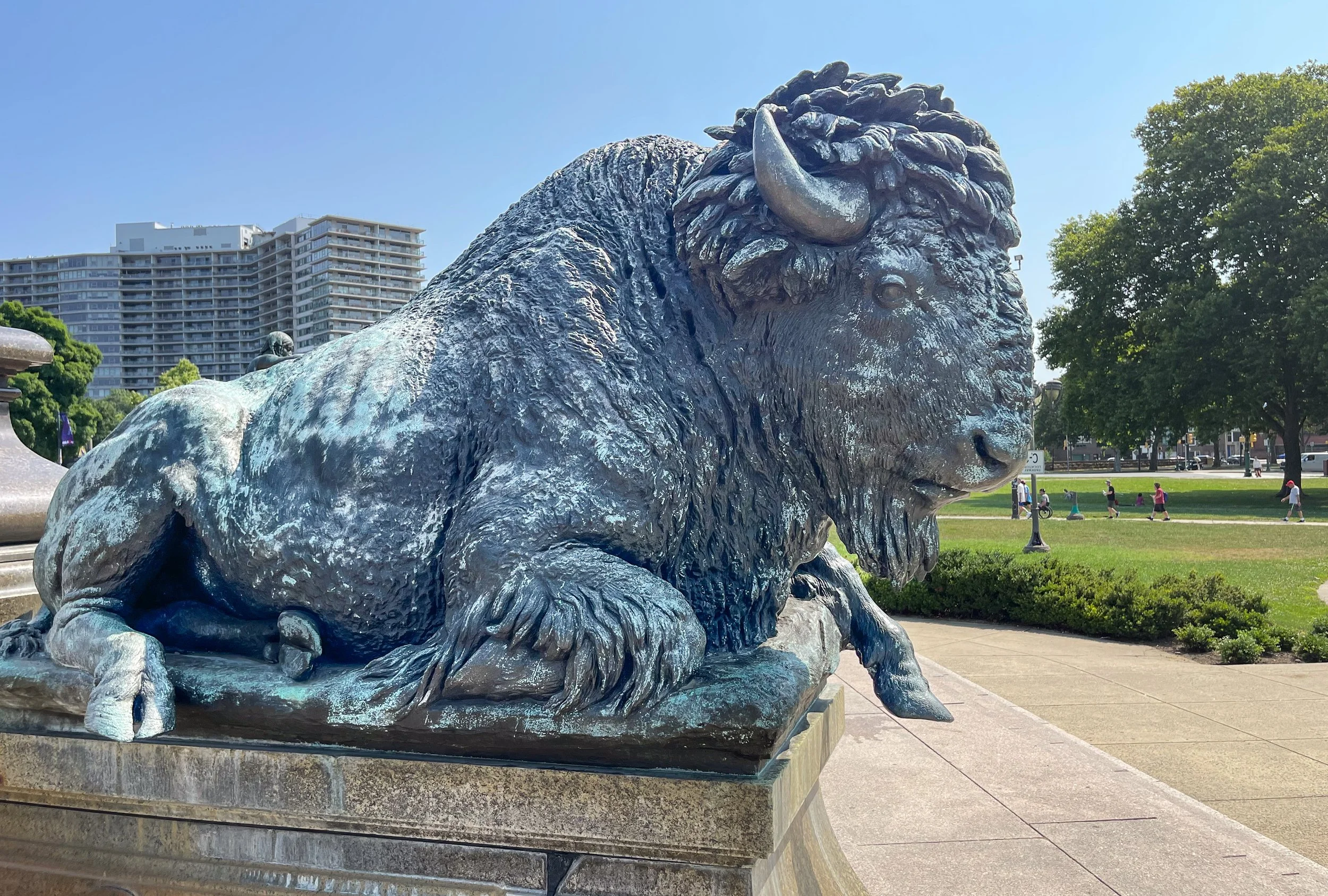
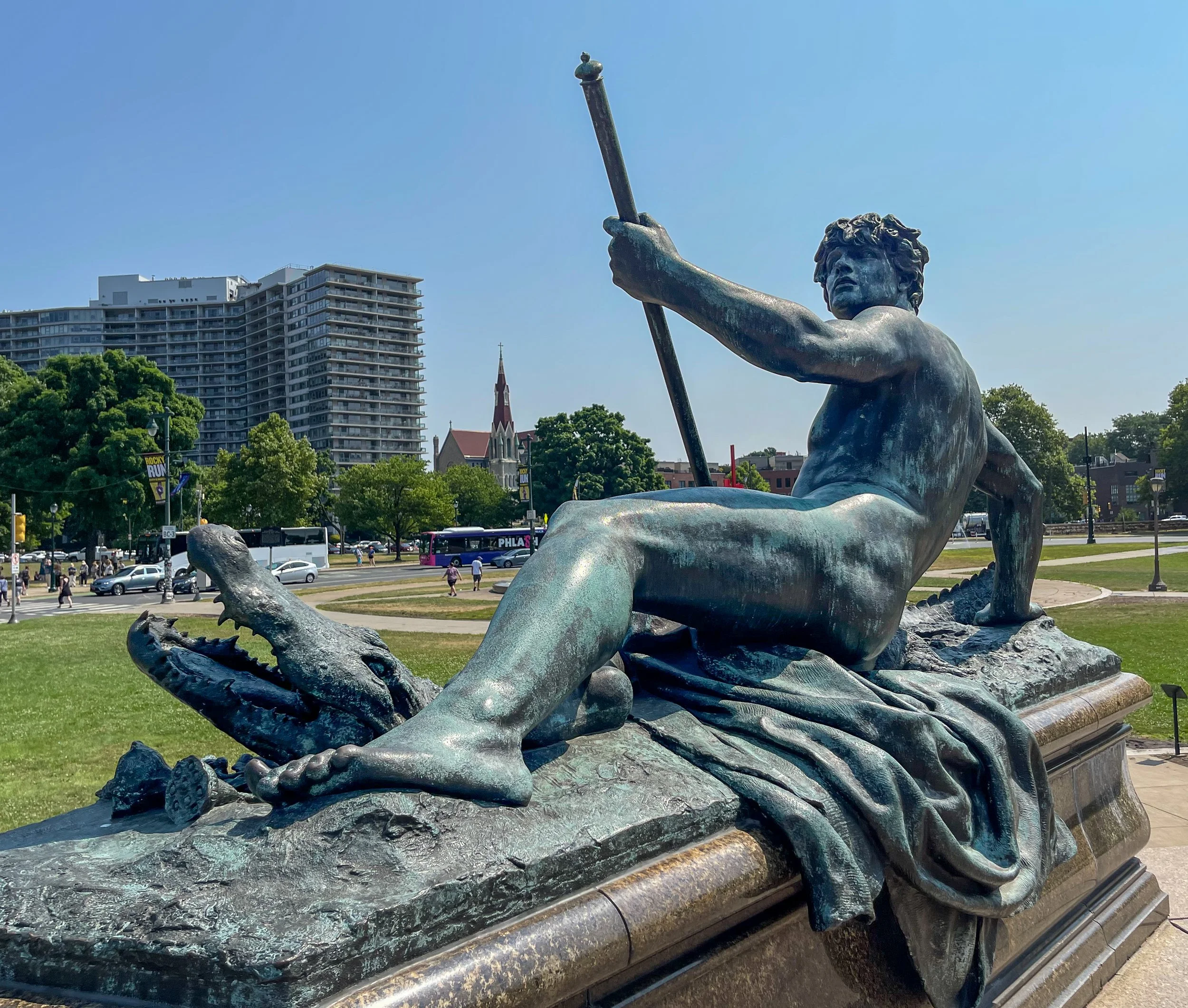
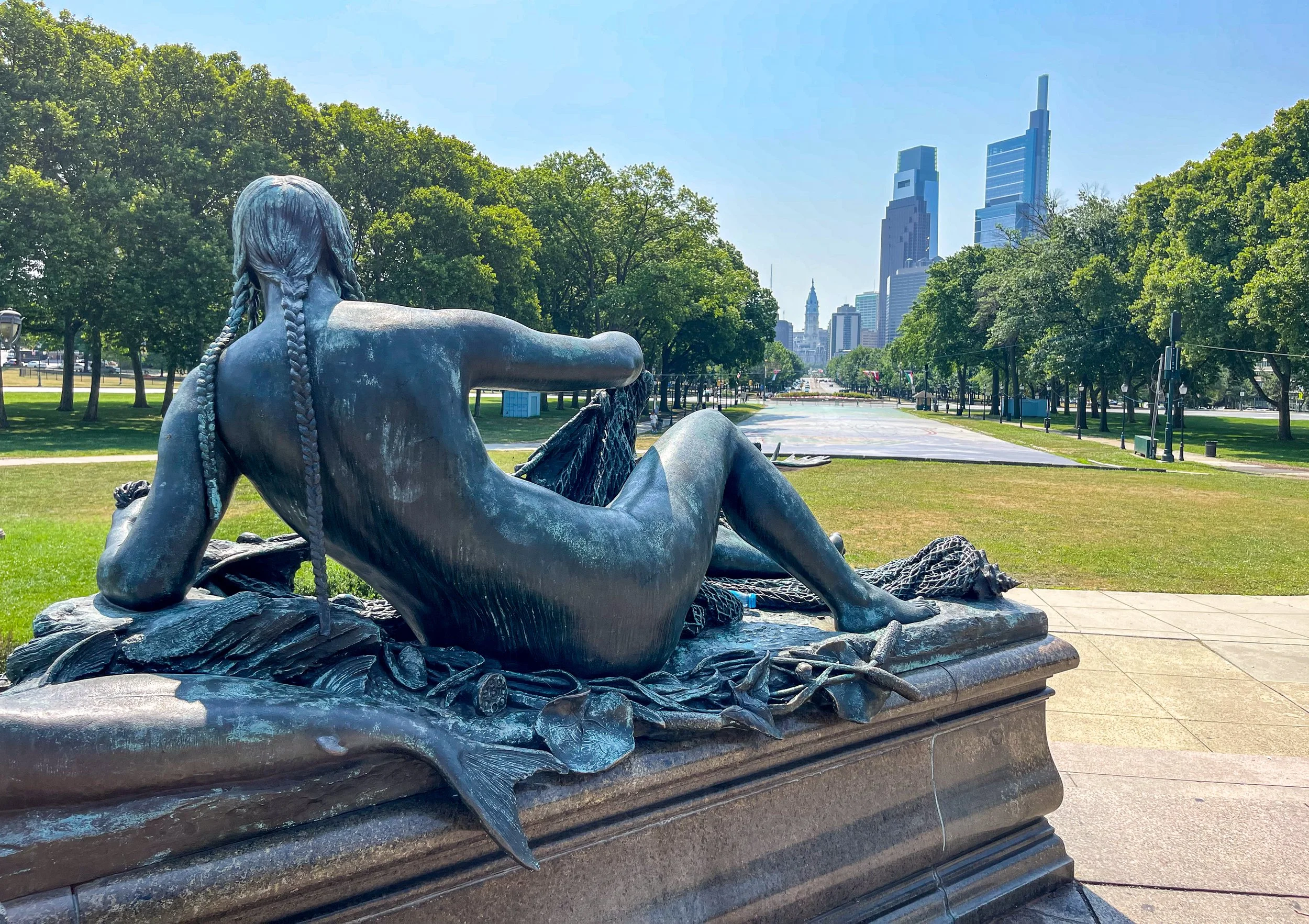
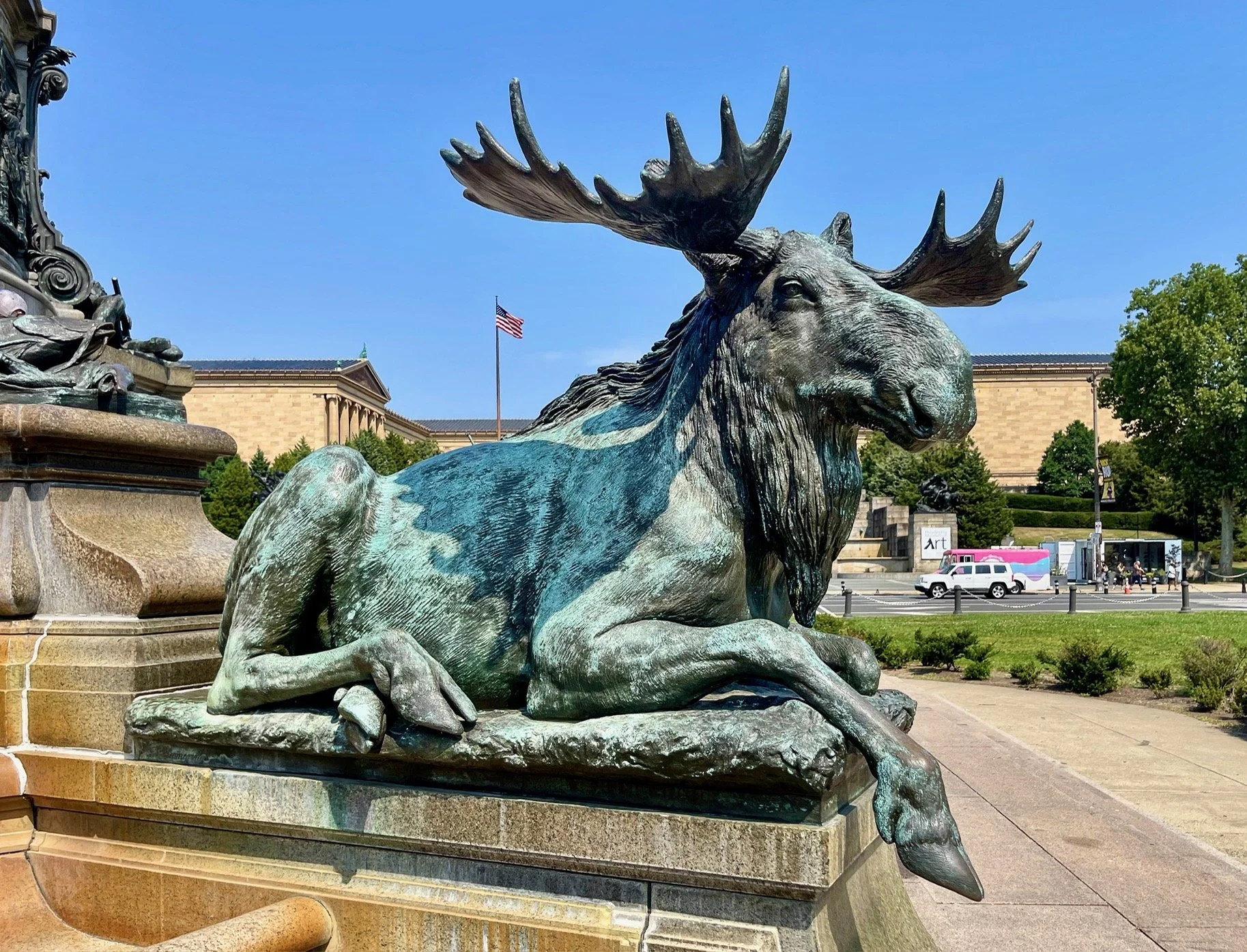
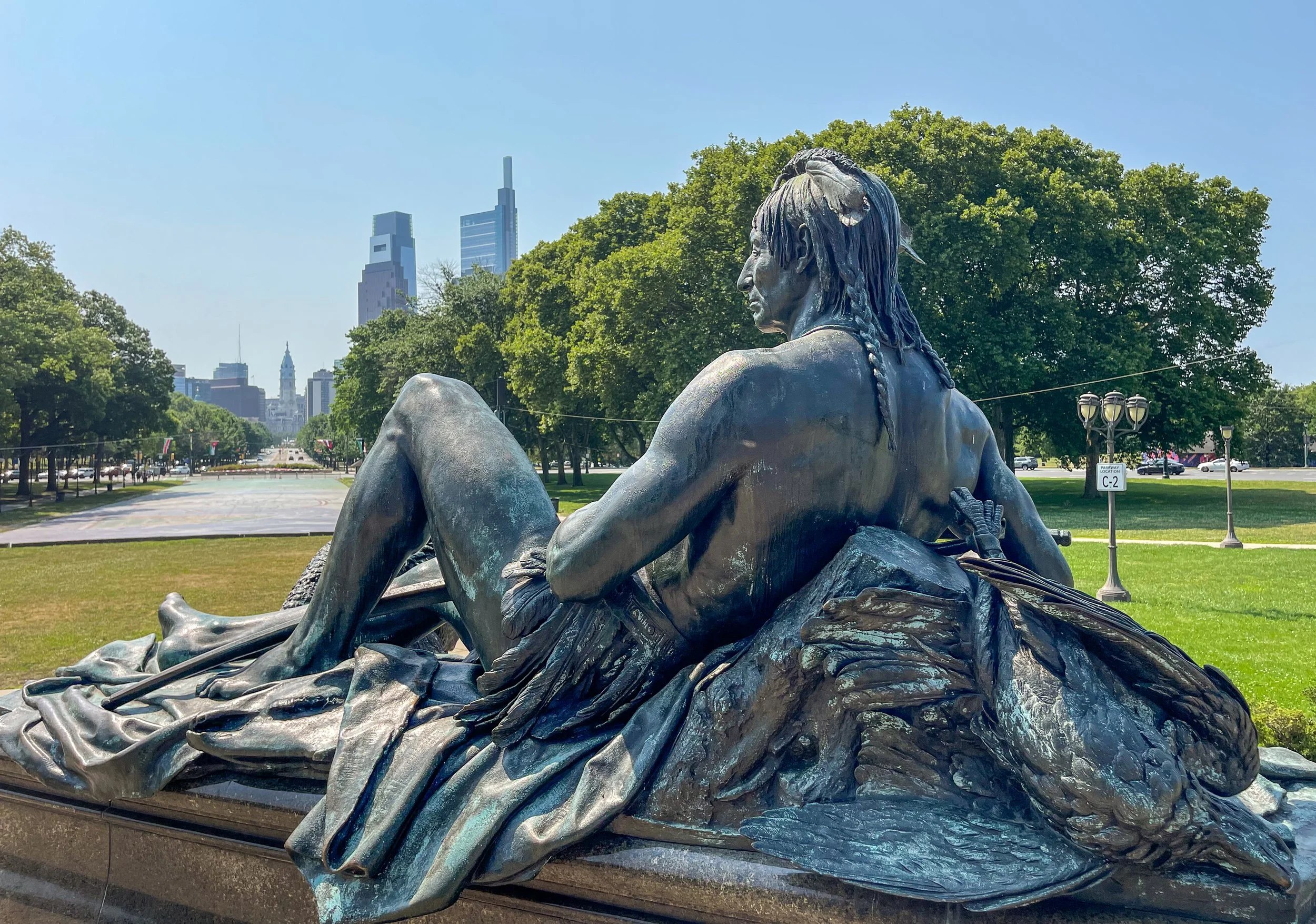
At the monument’s four corners are fountains representing great American rivers through the sculptures: the Mississippi flanked by a bear and a man battling an alligator; the Potomac with elk and a woman with a paddle; the Hudson featuring moose and a woman handling a fishing net; the Delaware with bison and an archer. Thirteen stairs on all sides signify the original colonies. Beneath Washington, a female figure and eagle symbolize the nation; relief sculptures around its base feature Revolutionary scenes, including one with Franklin.
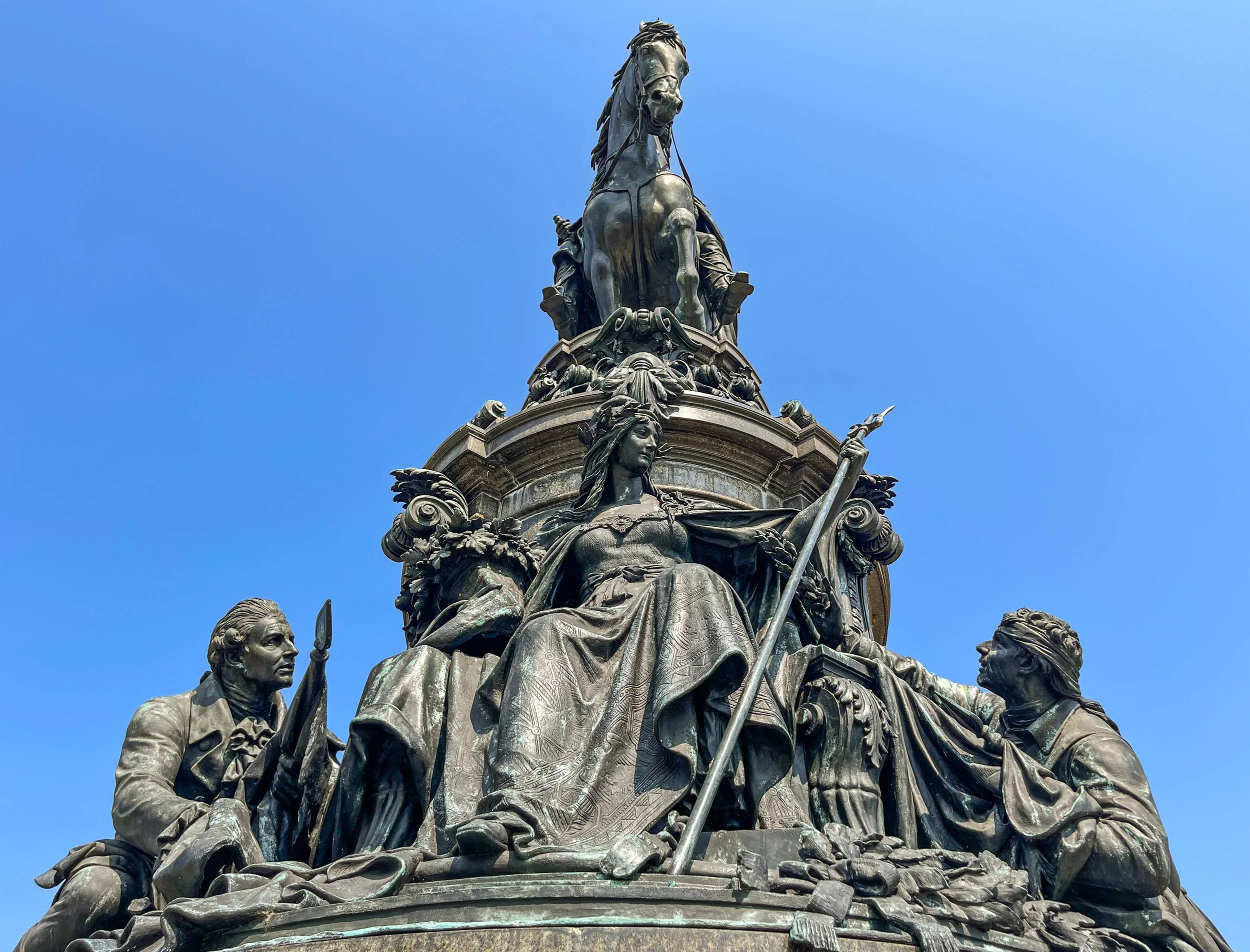
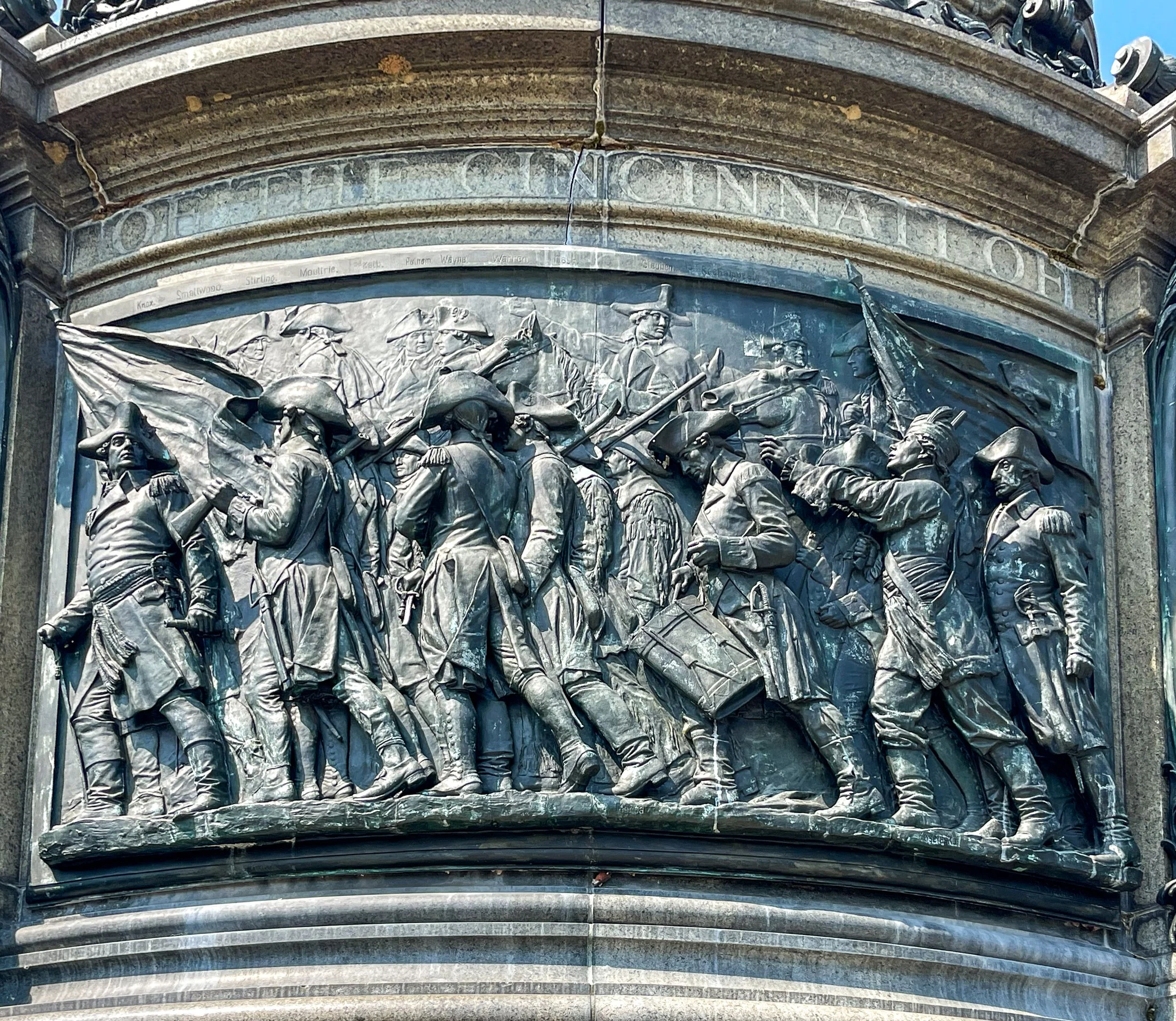
The Pennsylvania chapter of the Society of the Cincinnati, a patriotic organization founded in 1783, commissioned the monument. German sculptor Rudolf Siemering won the commission in 1881, yet he never set foot in America. Instead, he worked from his Berlin studio, referencing photographs, prints, and a life mask of Washington. Unveiled in 1897 at Fairmount Park's Green Street entrance, the monument was relocated to Eakins Oval in 1926 and restored in 1997.
Photographing it proved an ideal appetizer for the museum visit ahead. After my afternoon roaming its galleries, I walked out to the top of the Rocky Steps and captured Washington still peering down the Parkway toward City Hall, commanding attention from anyone willing to take the detour.