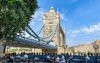
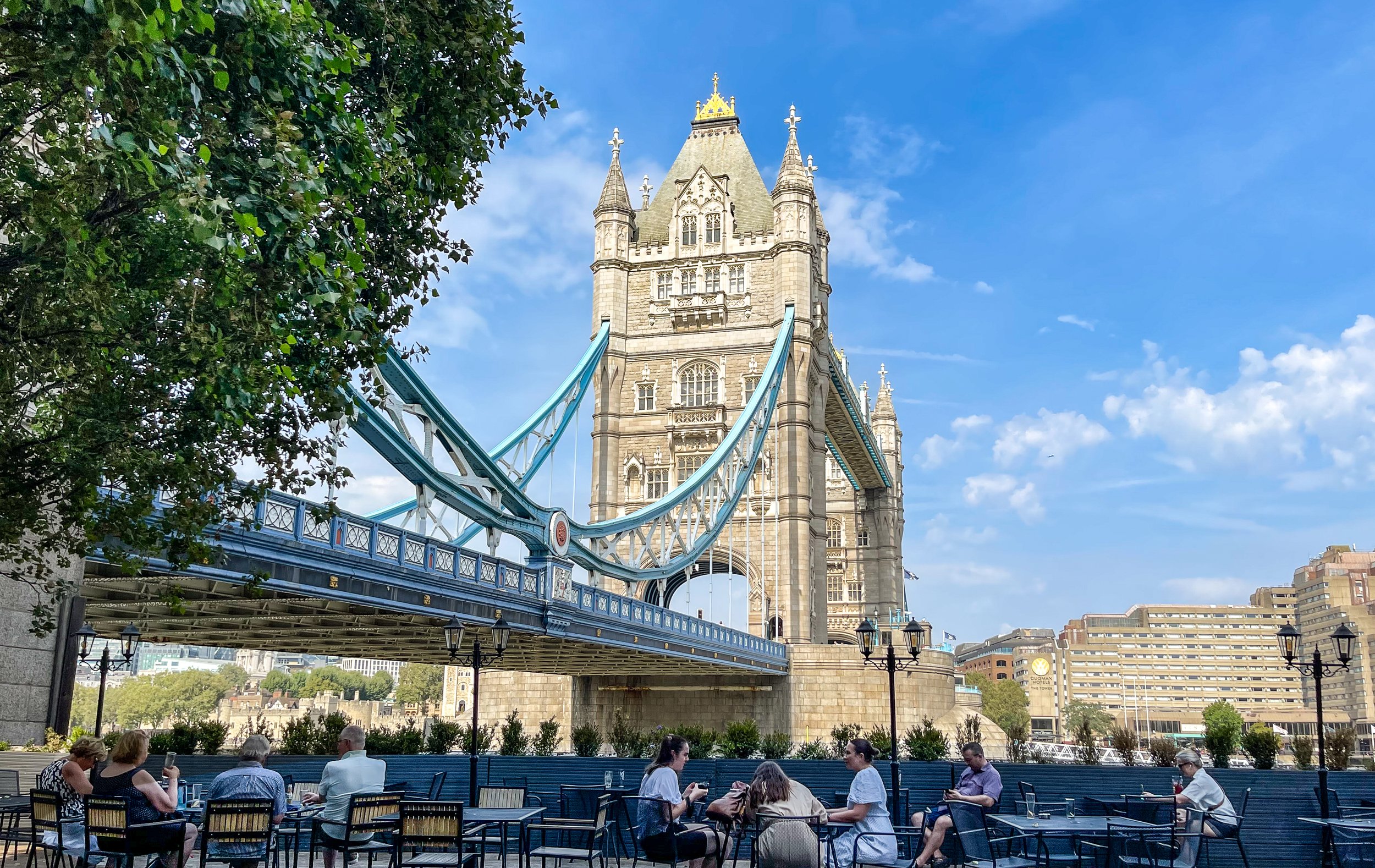







Seated in the shadows of Tower Bridge on the south bank of the Thames River in London.The drawbridge was opened in 1894 and spans 800 feet between its twin towers that rise 200 feet above the water.The towers house the machinery that raises the two bascules, both weighing in at approximately 1,000 tons.The bridge connects the Greater London boroughs of Tower Hamlets and Southwark.(Photo: © Joseph Kellard/kellardmedia.com)
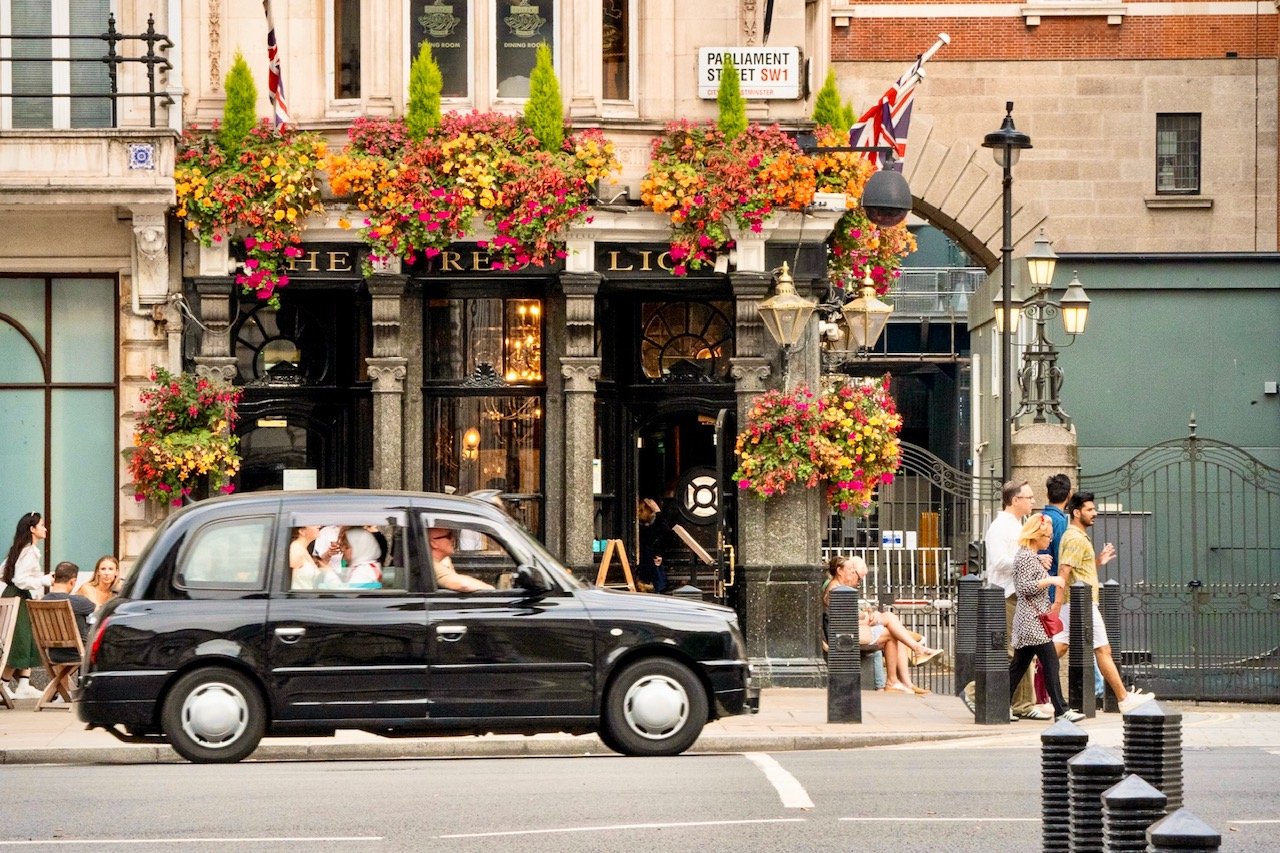
A black cab cruises by The Red Lion, at 48 Parliament St. in London. Given its proximity to the United Kingdom's political institutions, including the Houses of Parliament, the pub is famous for its patrons who work in government.
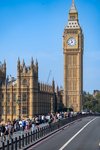
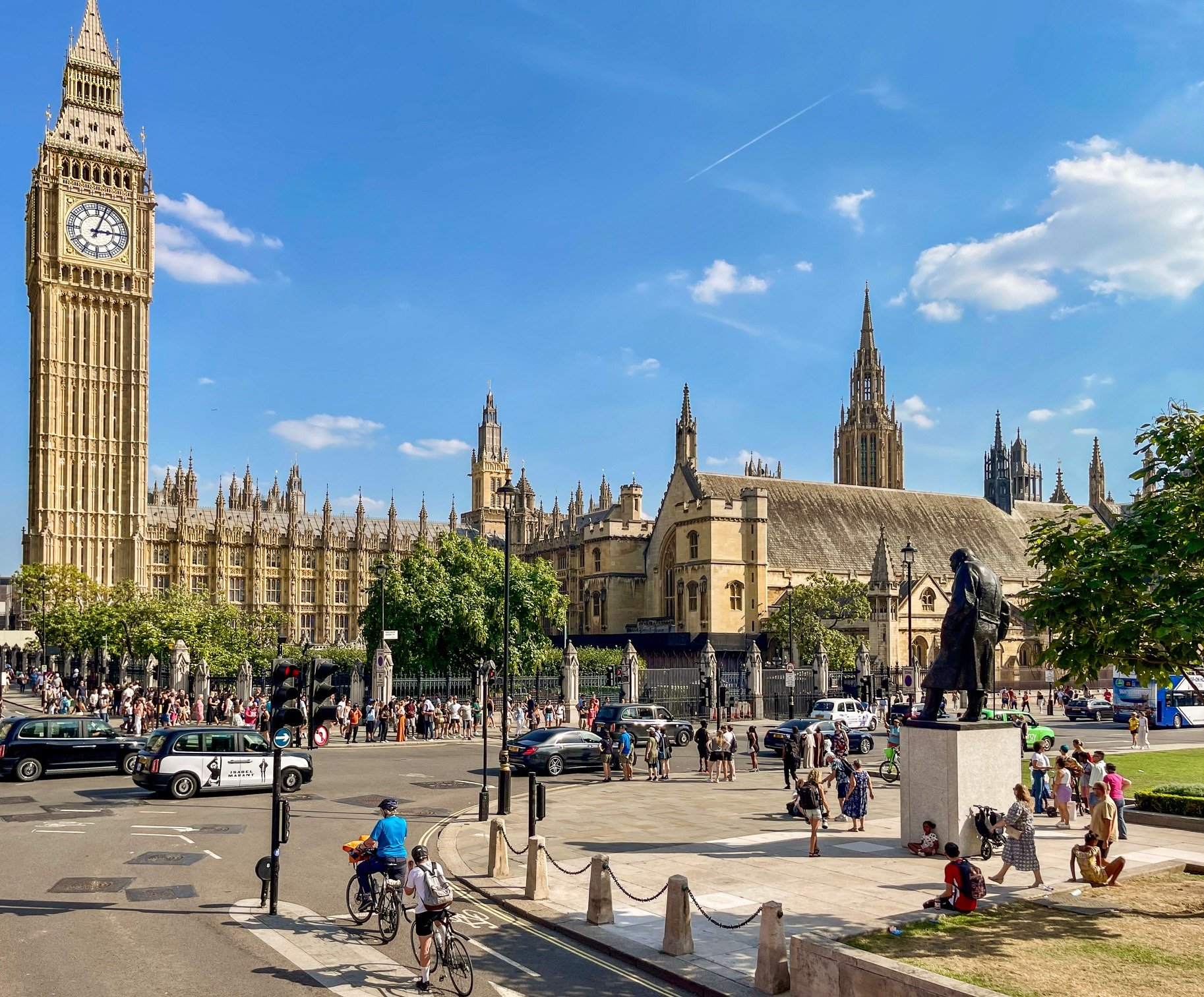
The Palace of Westminster, the home to the Parliament of the United Kingdom, was constructed after a fire in 1834 destroyed the previous palace that had served as the royal residence for centuries. Commonly known as the House of Parliament, the present building was constructed between 1837 and 1860.
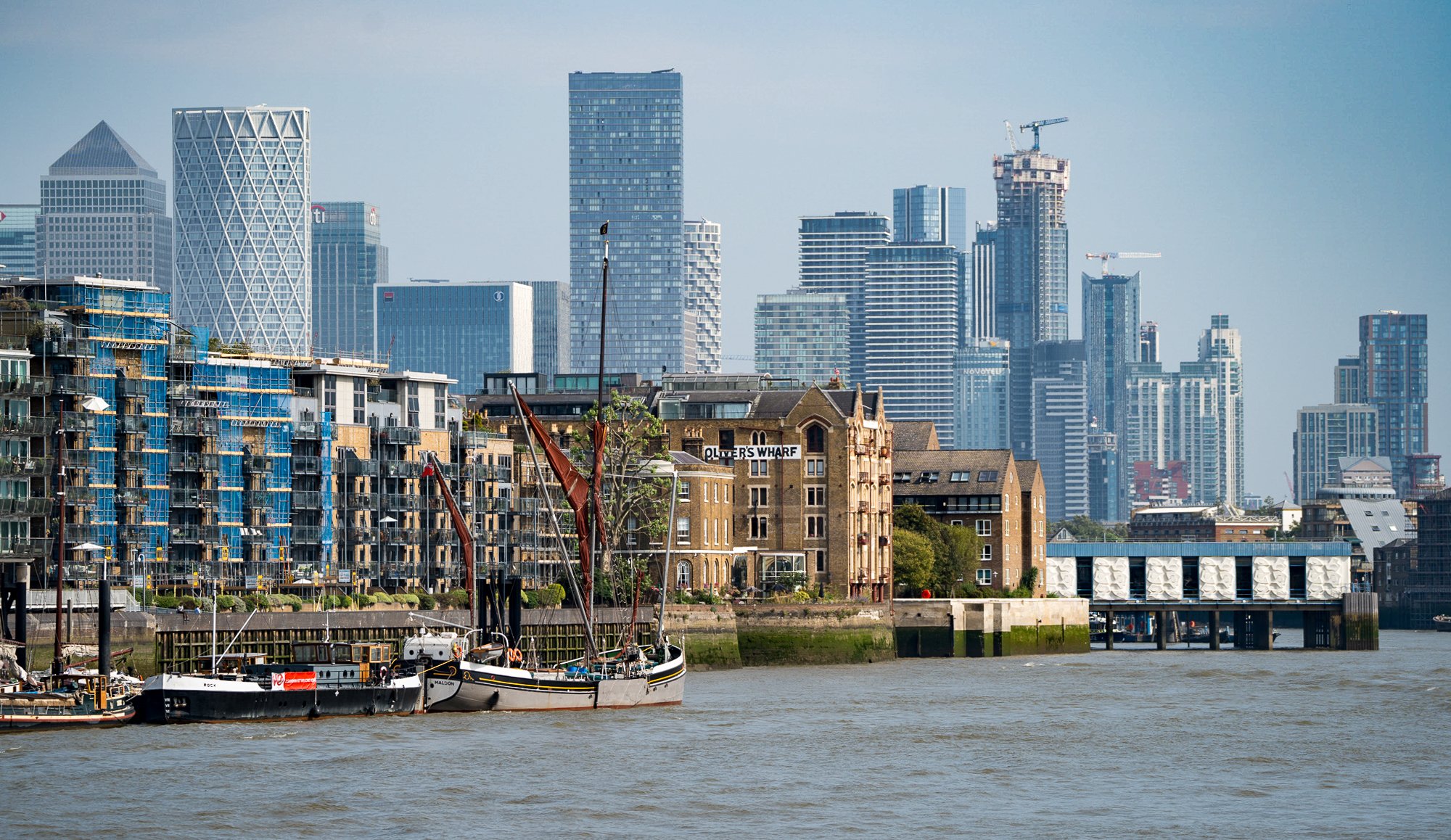
I took this photo of the London skyline while walking along the Thames River east of the Tower Bridge.
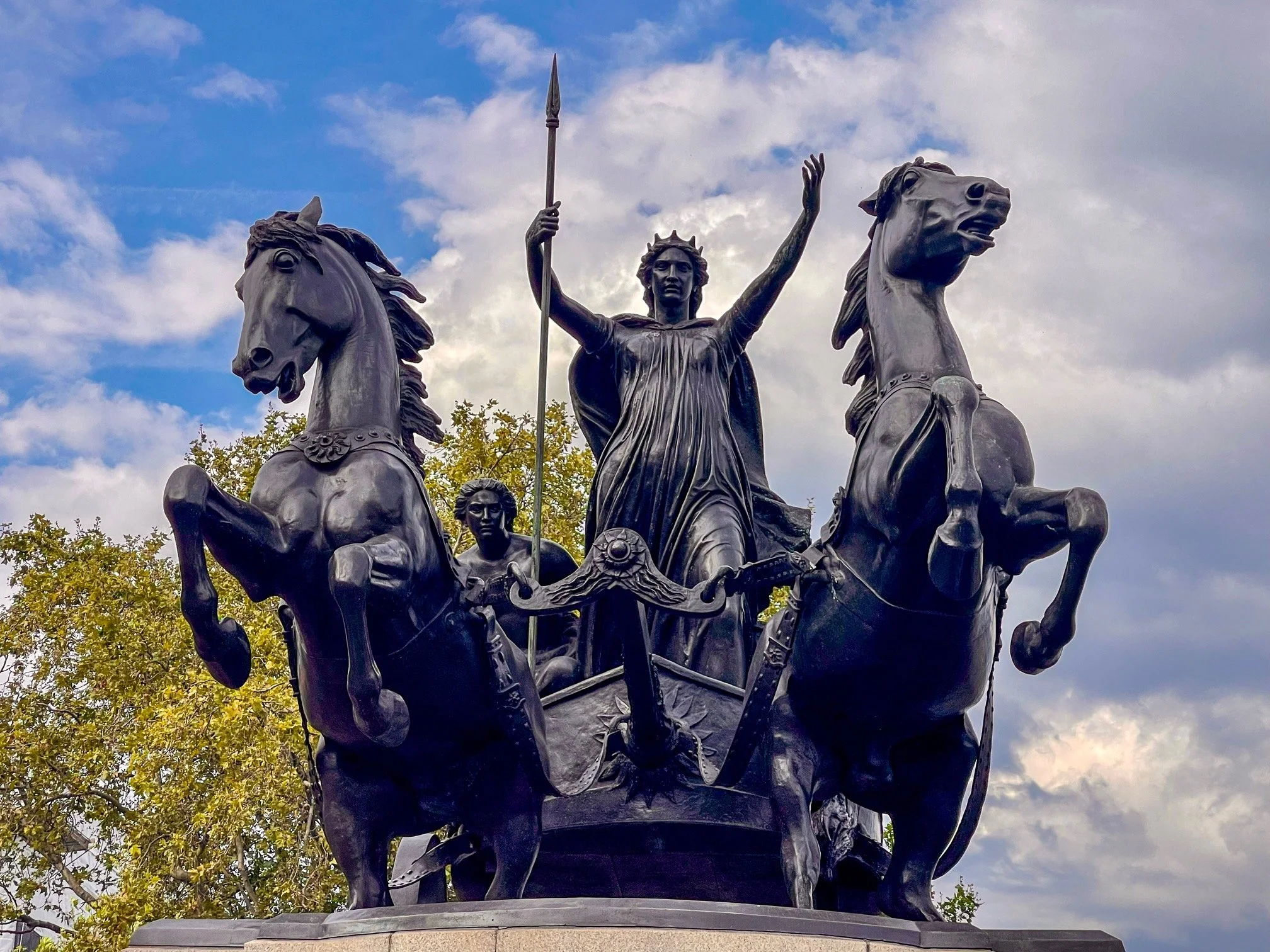
Three photos of “Boadicea and Her Daughters,” a bronze sculpture by Thomas Thornycroft that is perched prominently at the west end of Westminster Bridge in London.Considered Thornycroft’s masterpiece, the statue depicts the spear-wielding Celtic queen Boadicea of the Iceni tribe commanding a chariot drawn by rearing horses, with her two daughters at her side. The dramatic sculpture commemorates the British revolt against Roman rule in 60-61 AD and became a symbol of British independence during the Victorian era. Also known as the Boudiccan Rebellion Statue, the artwork bears the inscription: “Regions Caesar never knew thy posterity shall sway.”Originally commissioned for the central arch of Decimus Burton’s entrance to Hyde Park, the statue’s journey to completion was lengthy and complex. Thornycroft finished a full-size model of the artwork before he died in 1885, but a lack of funds delayed its casting until 1898. The monument was finally erected at its current position at Westminster Bridge in 1902.
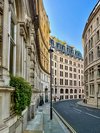
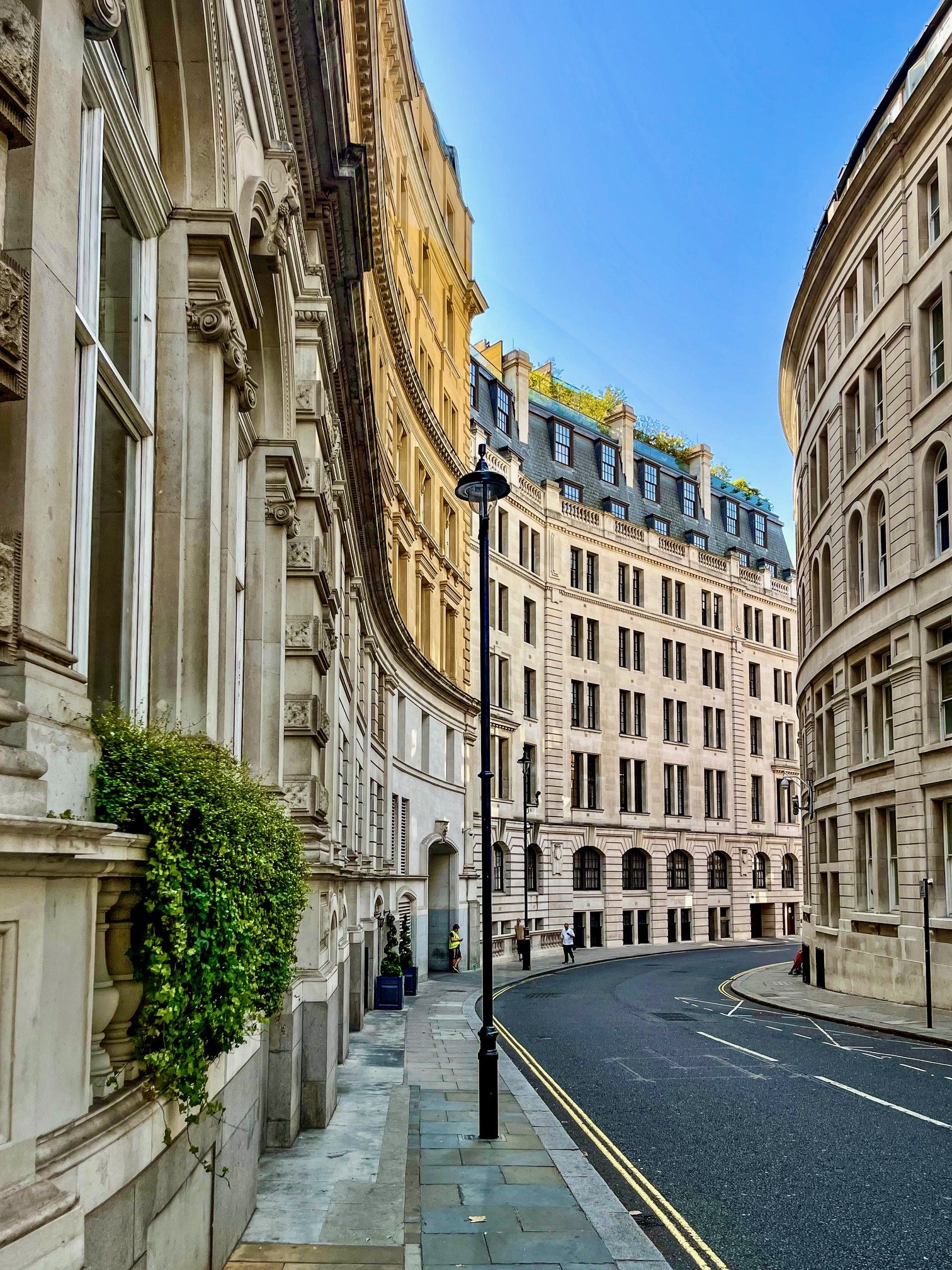
This street, Great Scotland Yard, connects Northumberland Avenue to Whitehall in the St. James’ district of Westminster in London. The street also has connections to English and Scottish royalty and the city's police.In centuries past, this scene consisted of open courtyards within the Palace of Whitehall, the primary residence of English monarchs from 1530 to 1698, the year it was destroyed by fire.During the 17th century, government buildings were built on the yards, which housed visiting Scottish royalty and diplomats and also served as residences for English civil servants. The 19th century saw London’s Metropolitan Police build their headquarters at 4 Whitehall Place, the rear of which faced Great Scotland Yard. This served as the public entrance for the police, and the station was thusly referred to as Scotland Yard, a name that has become synonymous with the London police.
The Scotland Yard headquarters were relocated in 2016.
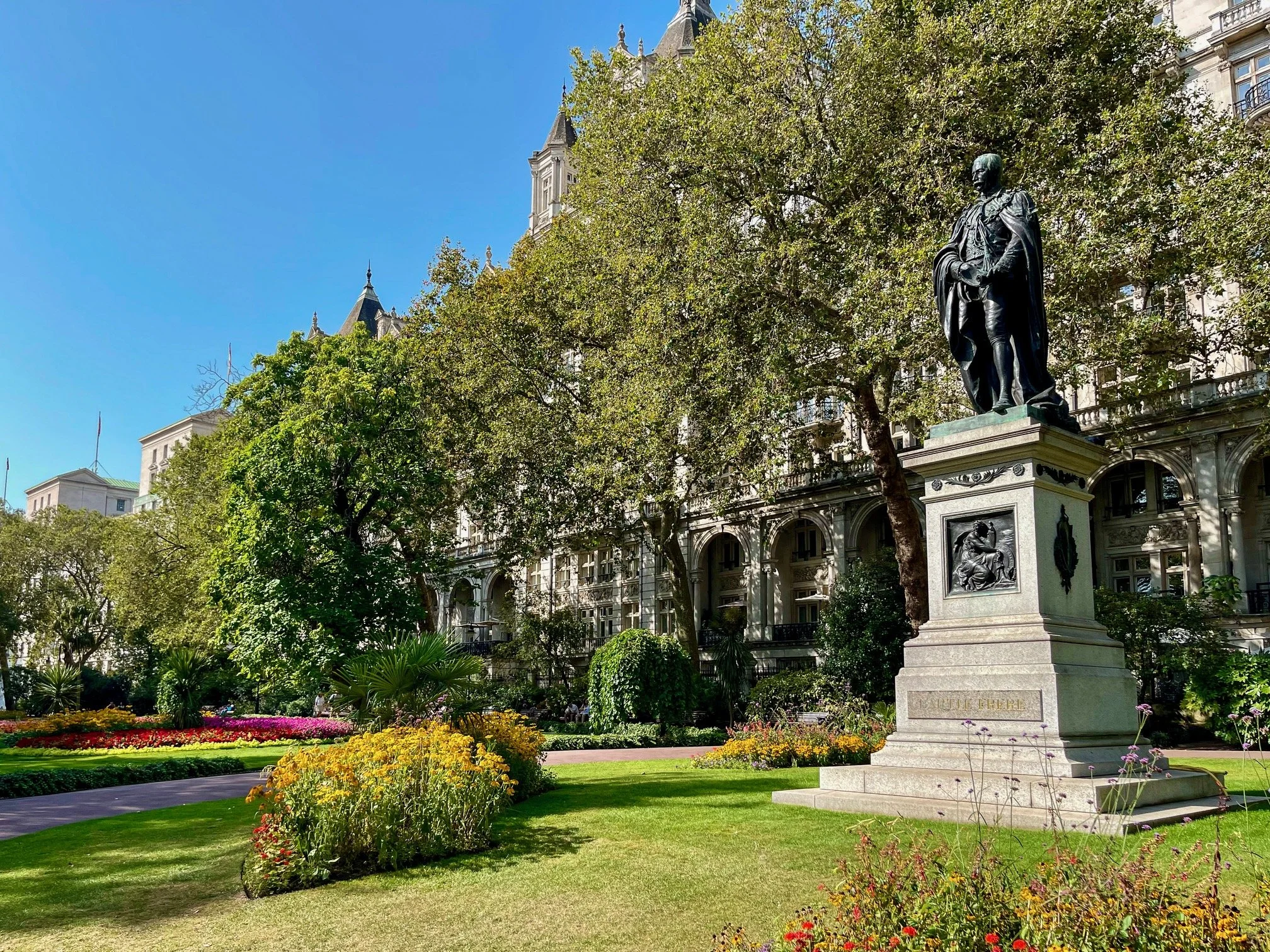
A statue of Sir Henry Bartle Frere (1815-1884) stands in Whitehall Gardens, a formal Victorian garden created in 1875 by George John Vulliamy alongside the River Thames Embankment. This bronze monument by Thomas Brock, unveiled in 1888, depicts the colonial administrator in India and South Africa wearing ceremonial robes. It is one of three commemorative statues in the landscaped green space that is positioned near Embankment Underground Station and the Jubilee Pedestrian Bridge.
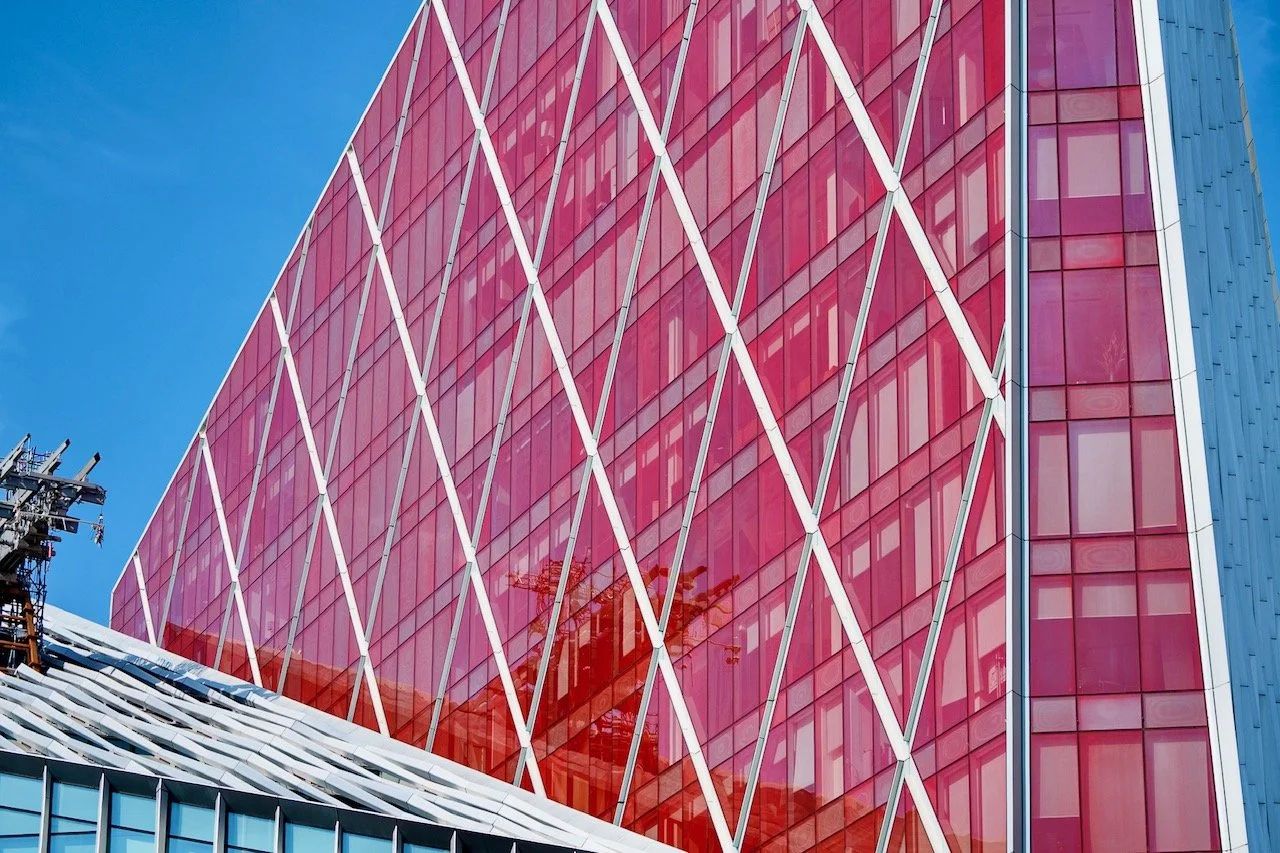
Nova Building is a mixed-use development combining residential, retail, and office space in London’s Victoria district. Completed in 2017 at 77 Buckingham Palace Road, the complex comprises three distinct structures. The red glass residential structure picture here houses 170 apartments and penthouses and is known as Nova Victoria. The two commercial buildings (not pictured—except for a rooftop) are designated Nova South and Nova North.
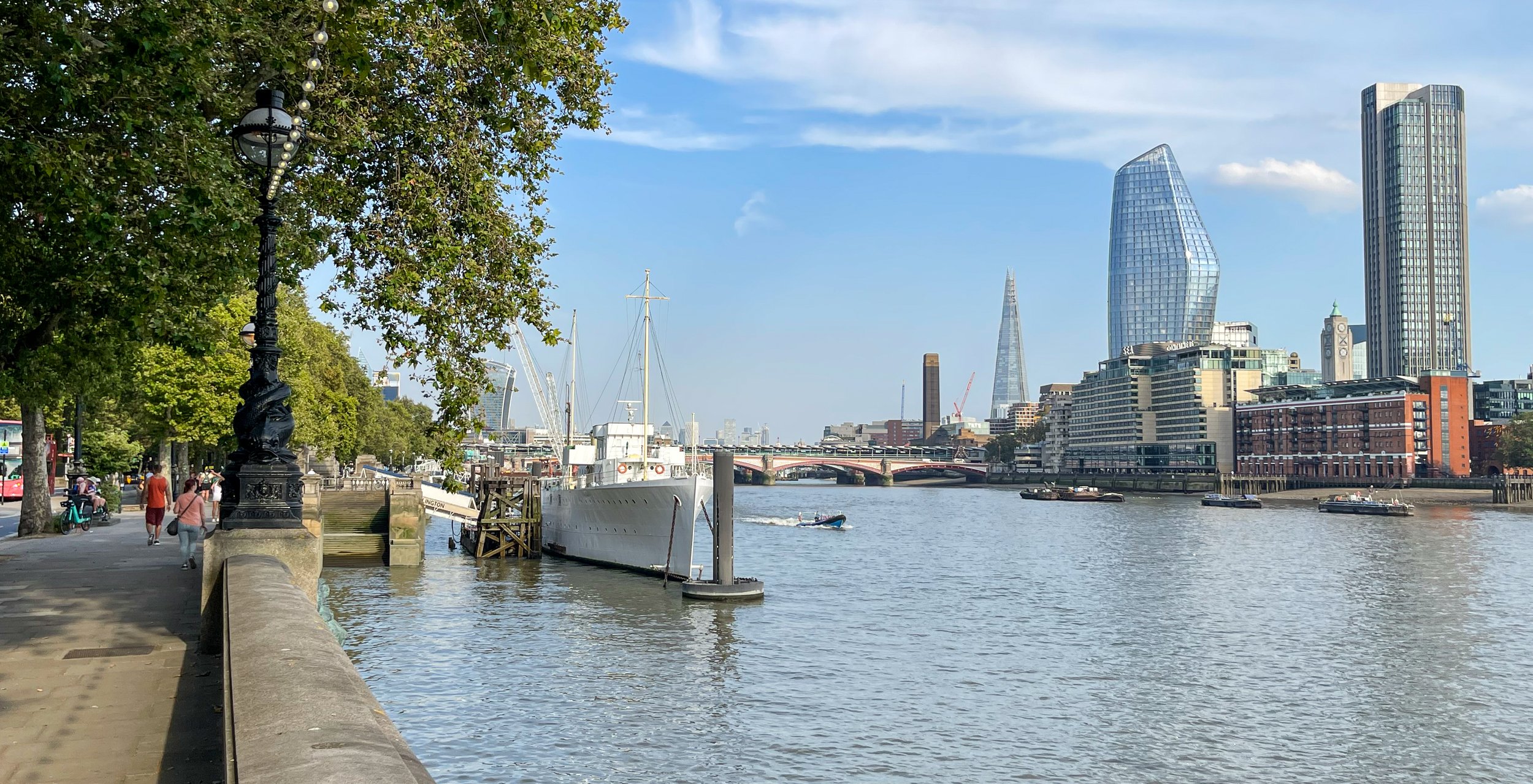
A London perspective from the Victoria Embankment on the South Bank of the River Thames.
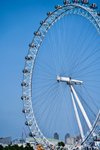
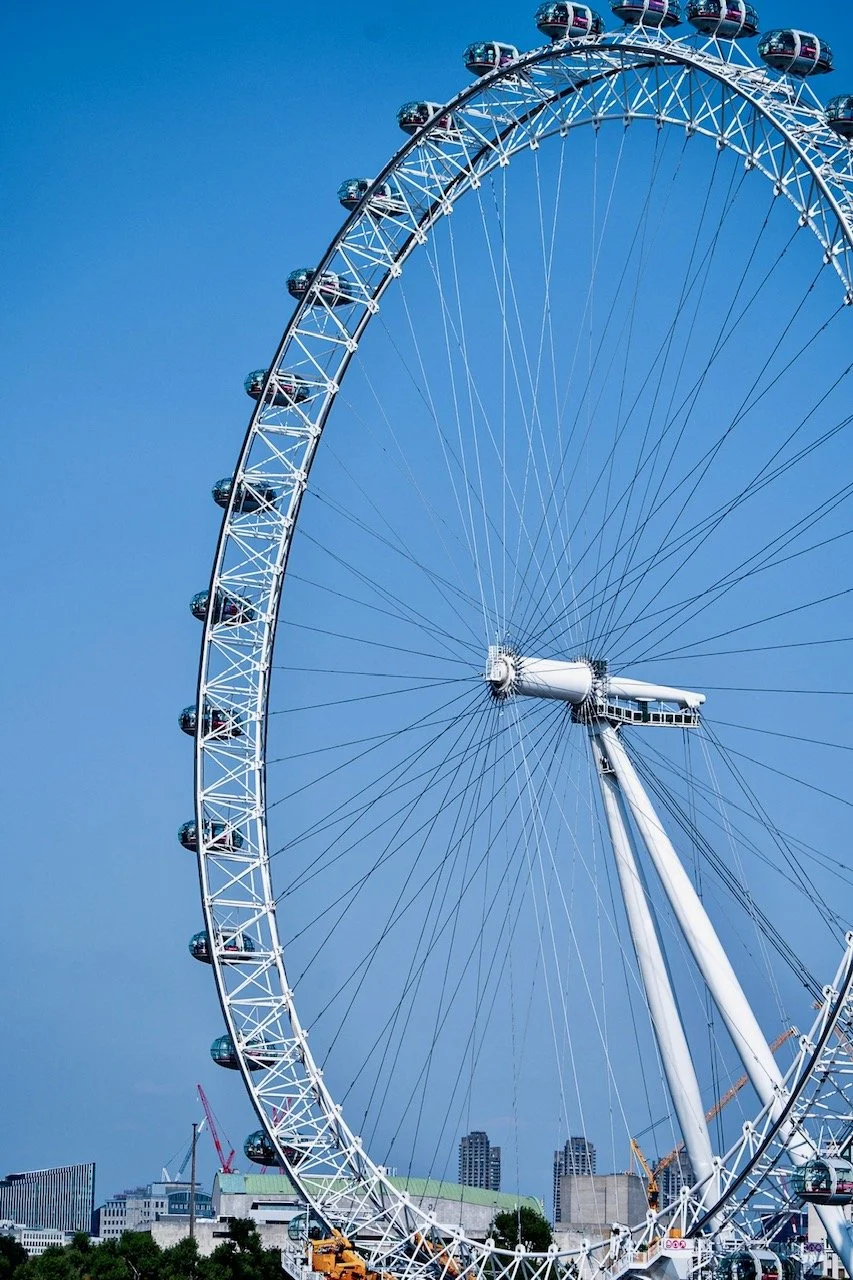
The London Eye, located on the South Bank of the River Thames, was opened in 2000 and stands 443 feet high and 394 feet in diameter. The structure is described as “the world’s largest cantilevered observation wheel” and “the UK’s most popular paid for visitor attraction,” according to www.londoneye.com.
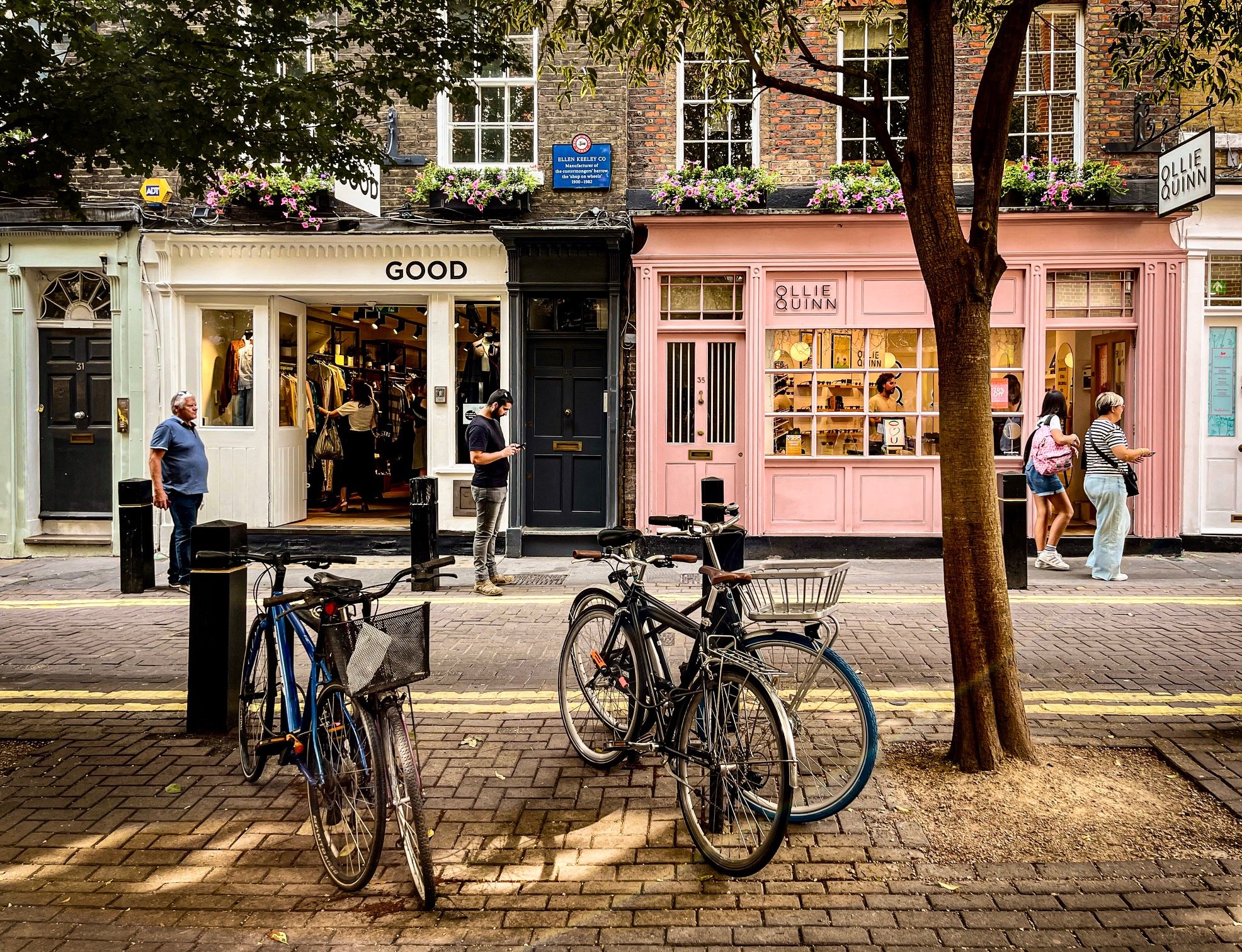
Storefronts on Neal Street at Covent Garden in London.(Photo: © Joseph Kellard/kellardmedia.com)
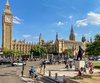
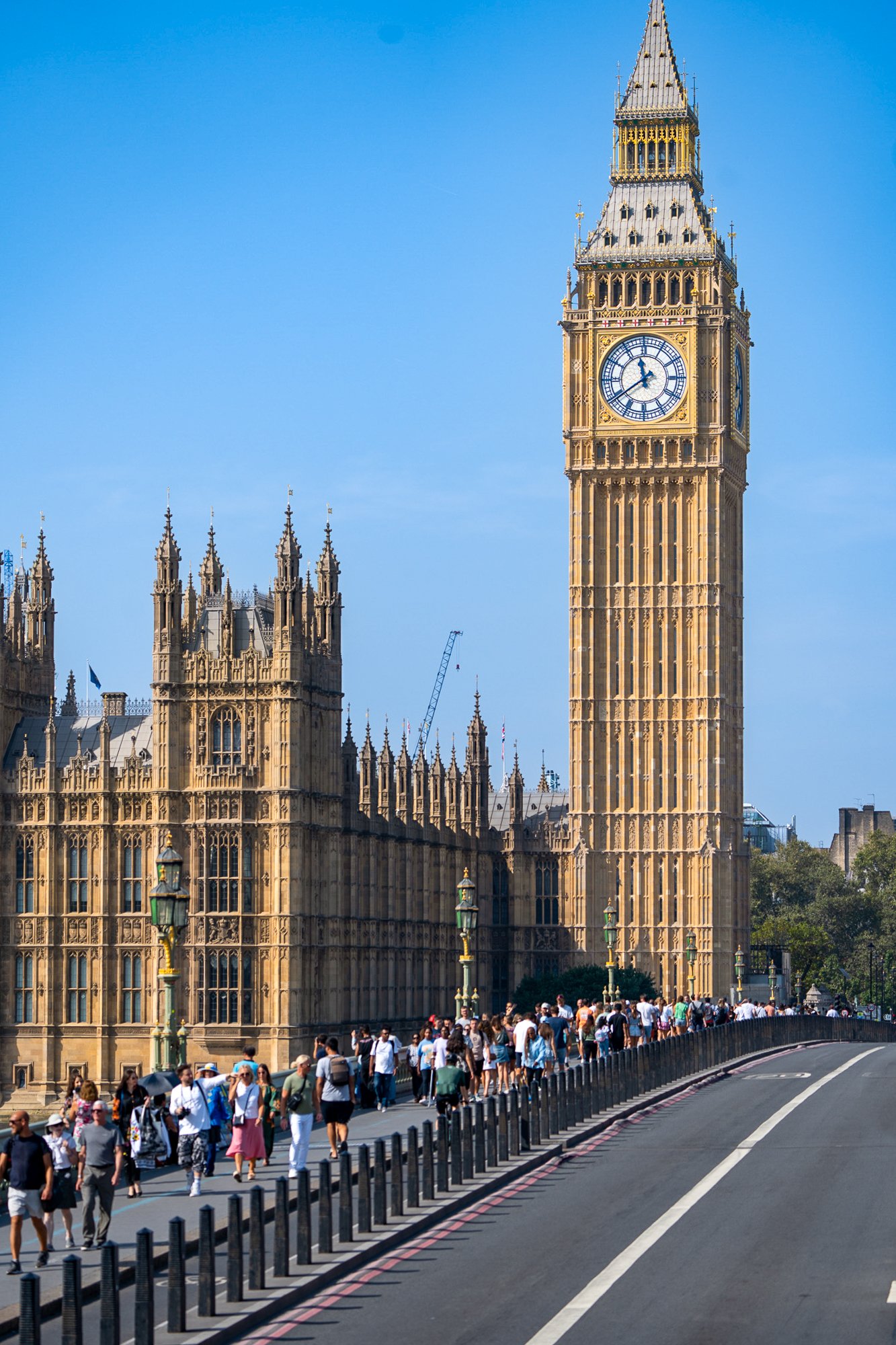
The Palace of Westminster, the home to the Parliament of the United Kingdom, was constructed after a fire in 1834 destroyed the previous palace that had served as the royal residence for centuries. Commonly known as the House of Parliament, the present building was constructed between 1837 and 1860.The reconstruction involved what would become perhaps the world’s most famous timepiece, the Great Clock of Westminster, better known as “Big Ben.” Designed in the Perpendicular Gothic Revival style by Augustus Pugin, the first stone of the clock tower was set in 1843. When completed in 1859, it rose 316 feet into the London sky from the north end of the palace.The clock with four quarter bells was designed by Edmund Beckett Denison and George Airy, and constructed by Edward John Dent and Frederick Dent. The clock began ticking on May 31, 1859, and the bells were first struck on July 11. The clock was nicknamed "Big Ben" after Sir Benjamin Hall, who supervised its installation.The palace lines the north bank of the River Thames. Nearby, the Westminster Bridge, which crosses the river, was opened in 1862 as a redesign of the original bridge that opened in 1750. The bridge is painted in a shade of verdigris green to mirror the color of the leather seats in the House of Commons.
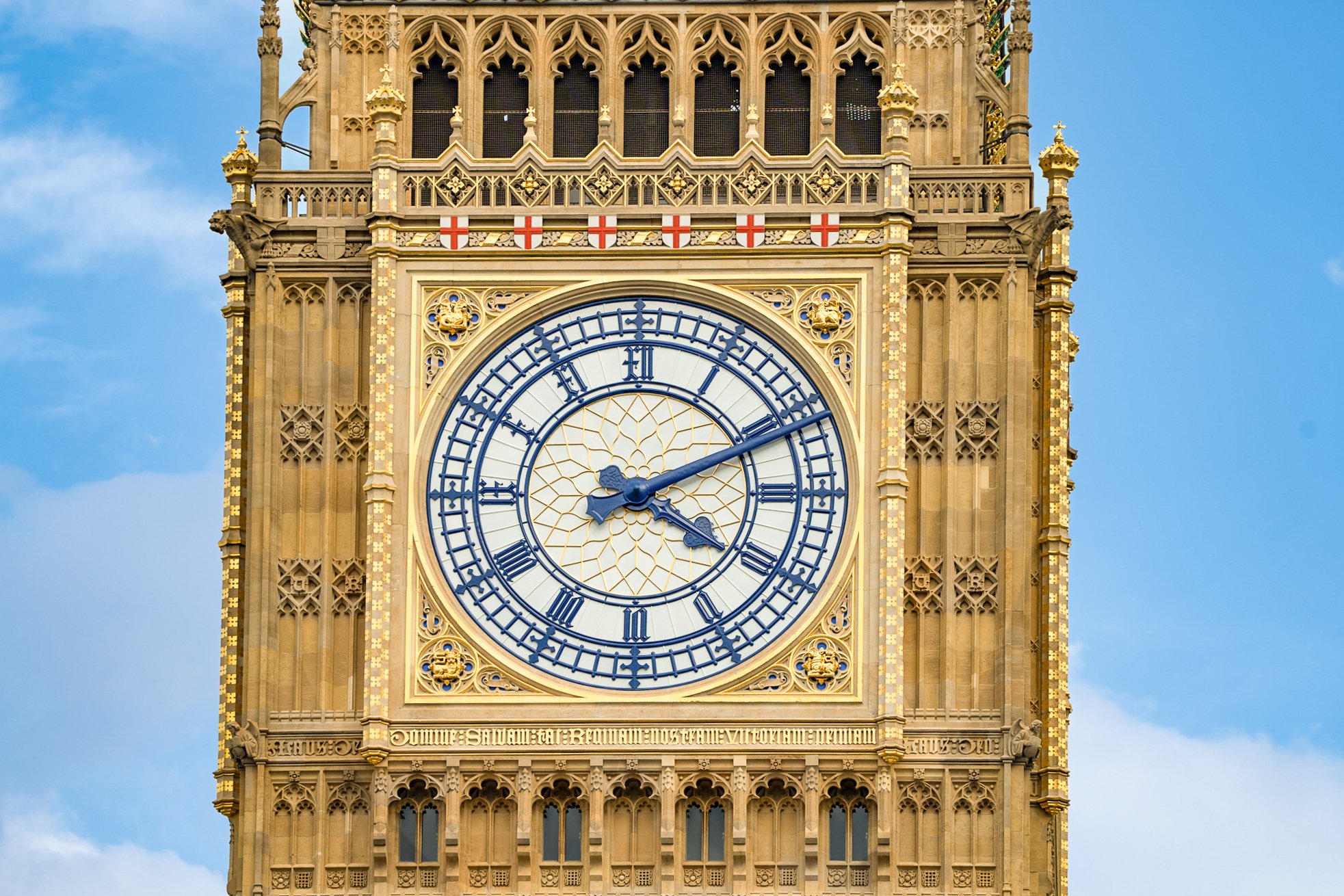
The reconstruction involved what would become perhaps the world’s most famous timepiece, the Great Clock of Westminster, better known as “Big Ben.” Designed in the Perpendicular Gothic Revival style by Augustus Pugin, the first stone of the clock tower was set in 1843. When completed in 1859, it rose 316 feet into the London sky from the north end of the palace.The clock with four quarter bells was designed by Edmund Beckett Denison and George Airy, and constructed by Edward John Dent and Frederick Dent. The clock began ticking on May 31, 1859, and the bells were first struck on July 11. The clock was nicknamed "Big Ben" after Sir Benjamin Hall, who supervised its installation.
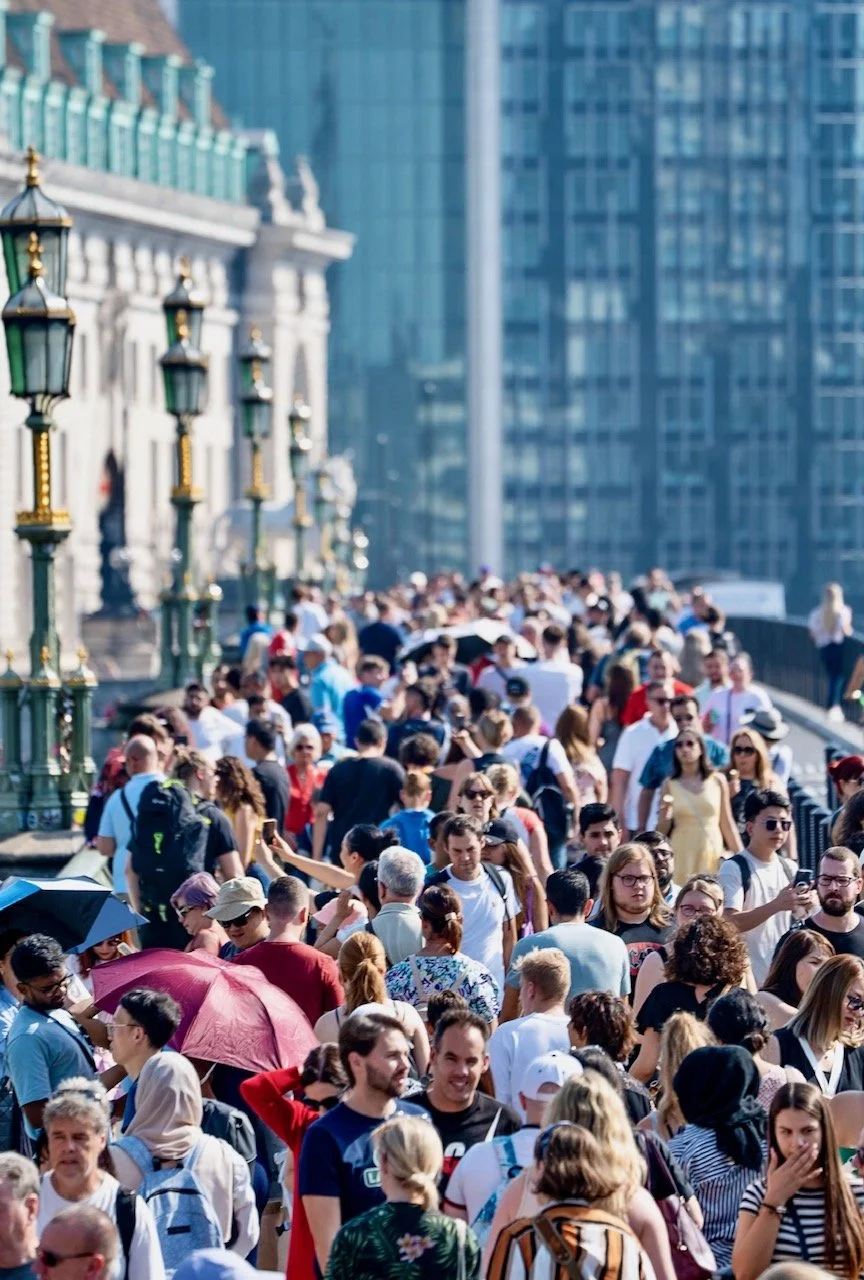
Pedestrians cross Westminster Bridge on the River Thames in London. The bridge connects Westminster near the Palace of Westminster to Lambeth. Opened in 1862, Westminster Bridge replaced the original 1750 structure and was last refurbished between 2005 and 2007.(Photo/Words © Joseph Kellard/kellardmedia.com)
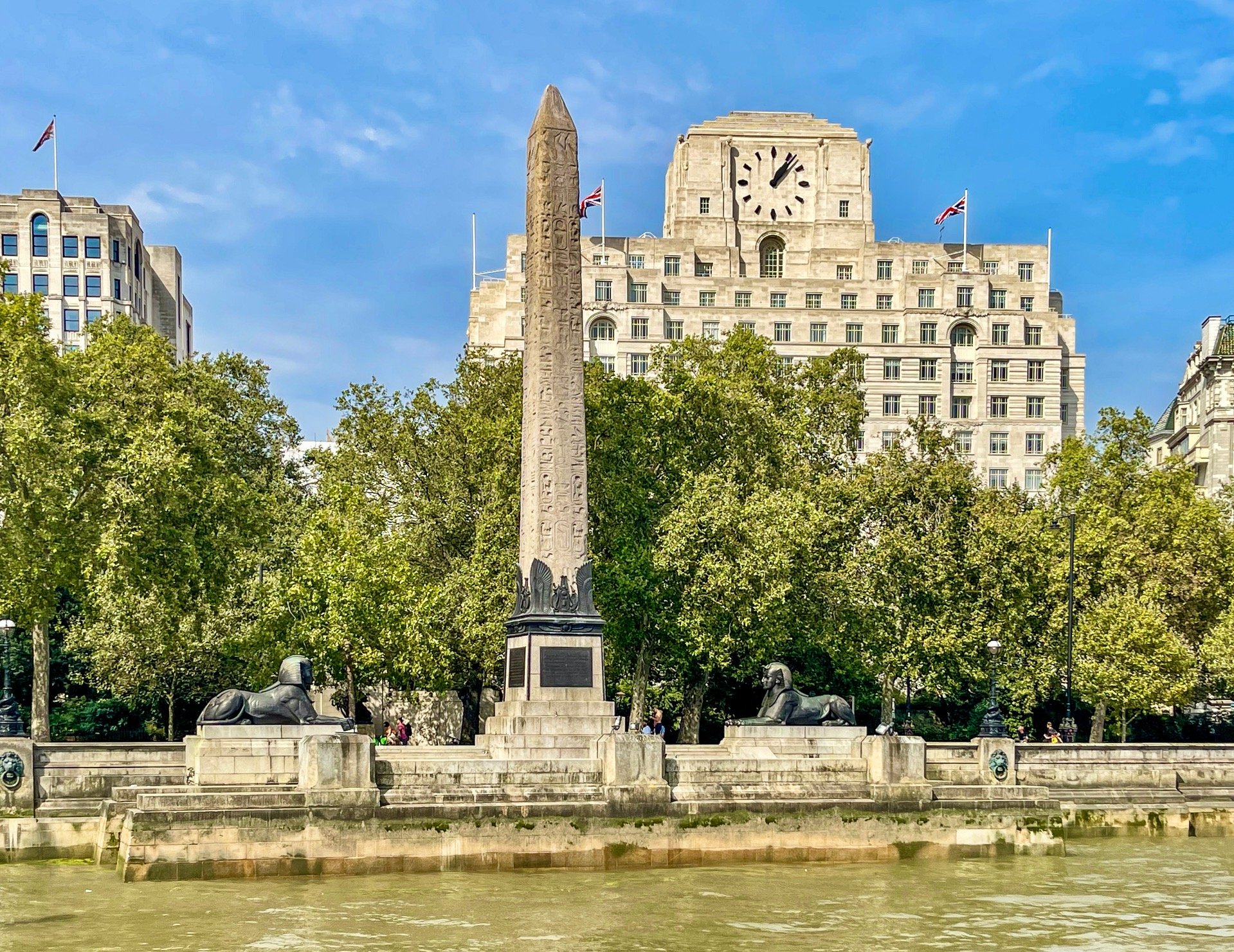
During a boat tour I took on the River Thames, I felt at times a bit like I was back home in New York.
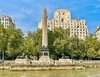
On the river’s banks were not just skyscrapers but also an ancient Egyptian obelisk also rising into the London sky, just like the one in Central Park in Manhattan, I’d thought.
And it turns out that the granite obelisks on each side of the Atlantic are twins. Pharaoh Thutmose III (1481-1425 BC) commissioned both structures for the Temple of the Sun in Heliopolis, where they were erected around 1450 BC.
In 12 BC, the Romans found the obelisks toppled and partly buried in the desert.They were transported to Alexandria and installed at a temple devoted to Julius Caesar that was built by Cleopatra. Today, the obelisks that stand nearly 69 feet tall and weigh more than 220 tons are both called “Cleopatra’s Needle.”
In 1819, Muhammad Ali, who ruled Egypt and Sudan, presented one obelisk as a gift to the United Kingdom, a gesture that commemorated two battles won by Lord Nelson and Sir Ralph Abercromby in Egypt in 1801. However, it was not erected on the Victoria Embankment in Westminster, now between Waterloo Bridge and Golden Jubilee Bridges, until 1878. The other in Central Park was erected in 1881, having been gifted to the United States to commemorate the opening of the Suez Canal.
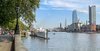
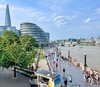
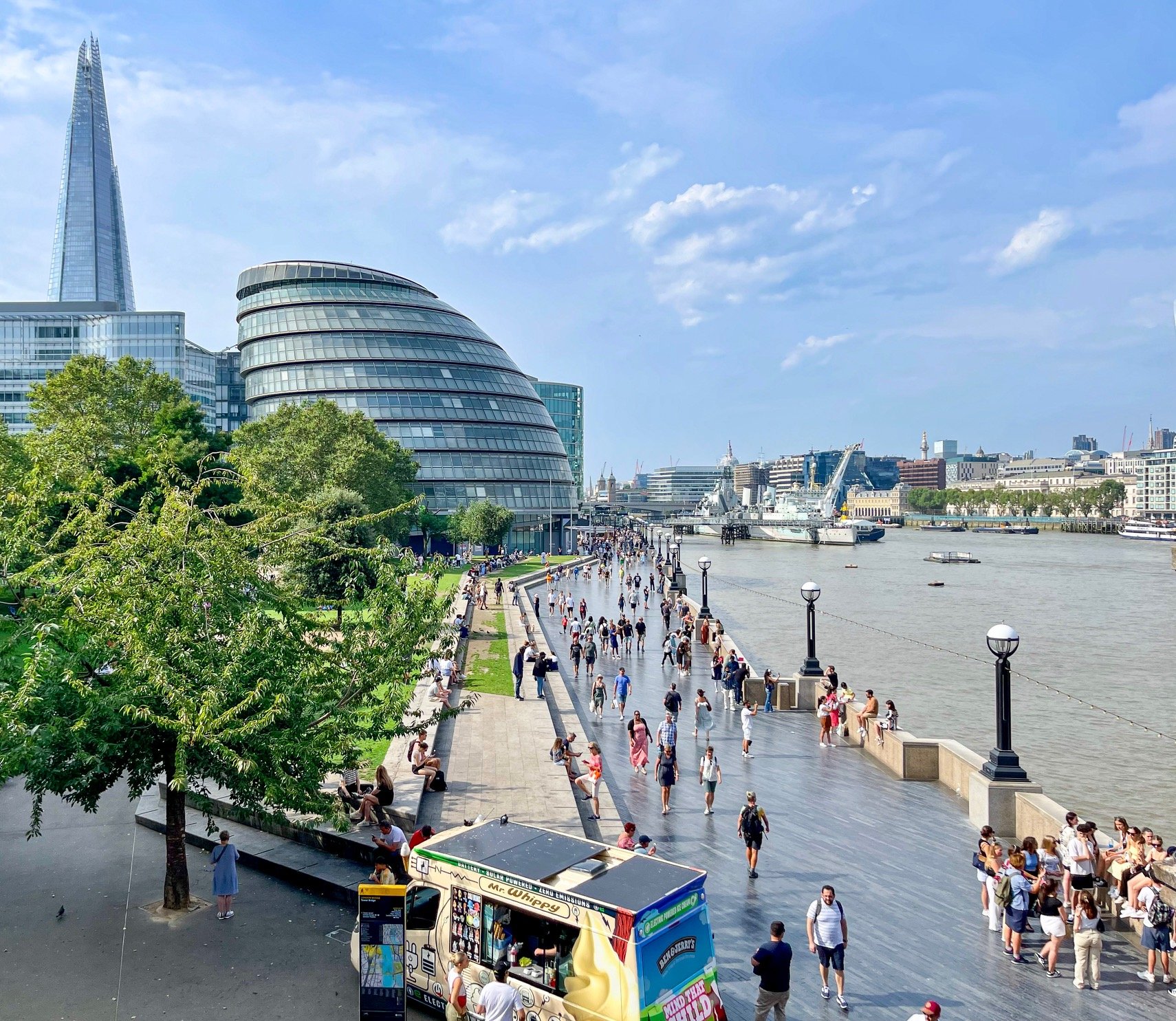
A view of Queen’s Walk, a pedestrian path that meanders along the south bank of the Thames River in London. The promenade extends 2.4 miles from Tower Bridge, from where I snapped this photo, to Lambeth Bridge. London City Hall and The Shard, the tallest building in Western Europe, rise in the background.
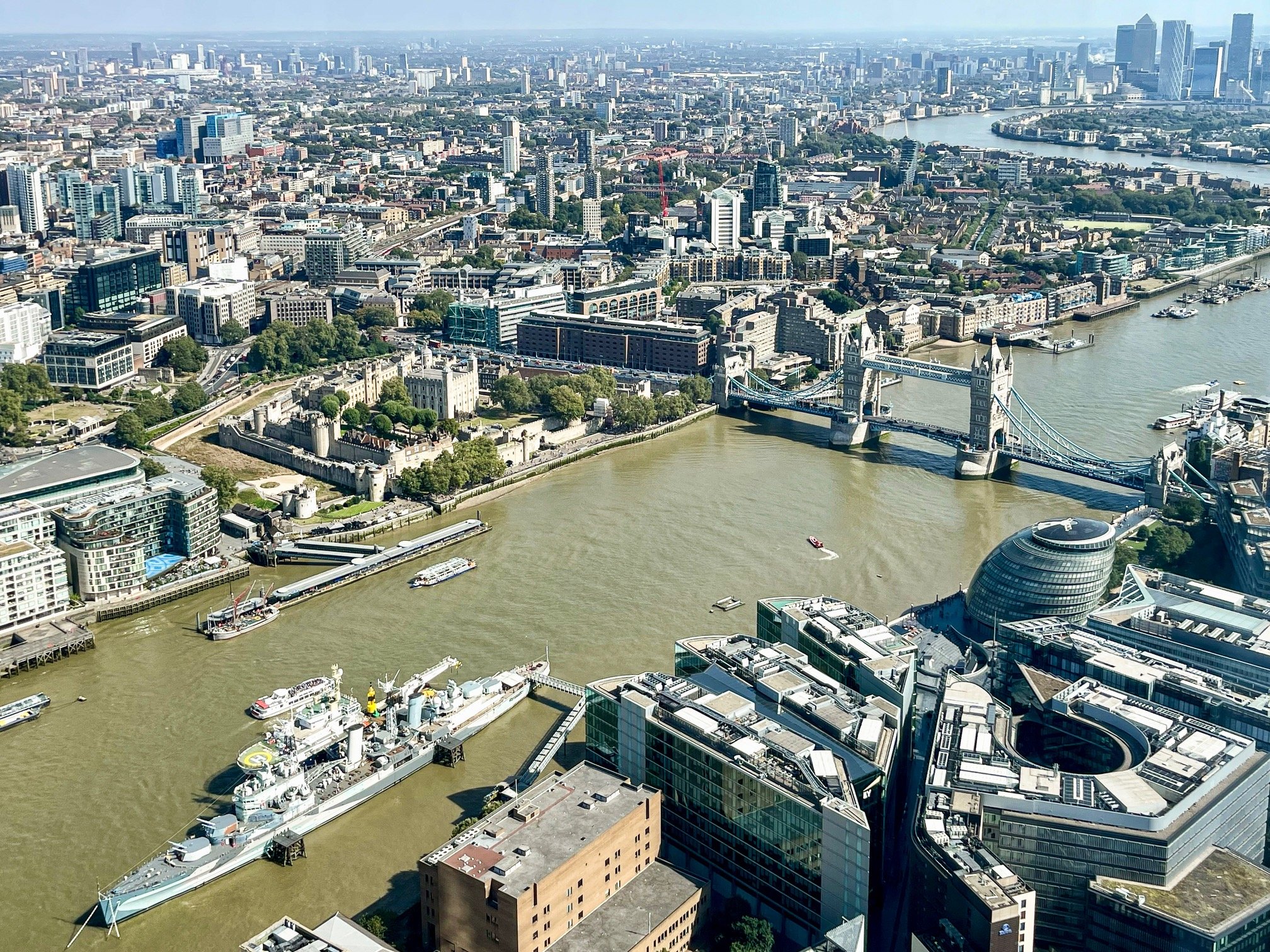
The Tower Bridge and the North and South banks of the Thames River seen from the observation deck on the 69th floor of The Shard, London’s tallest skyscraper. The Royal Navy’s World War II-era battleship HMS Belfast is permanently docked on the river and serves as a museum.
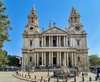
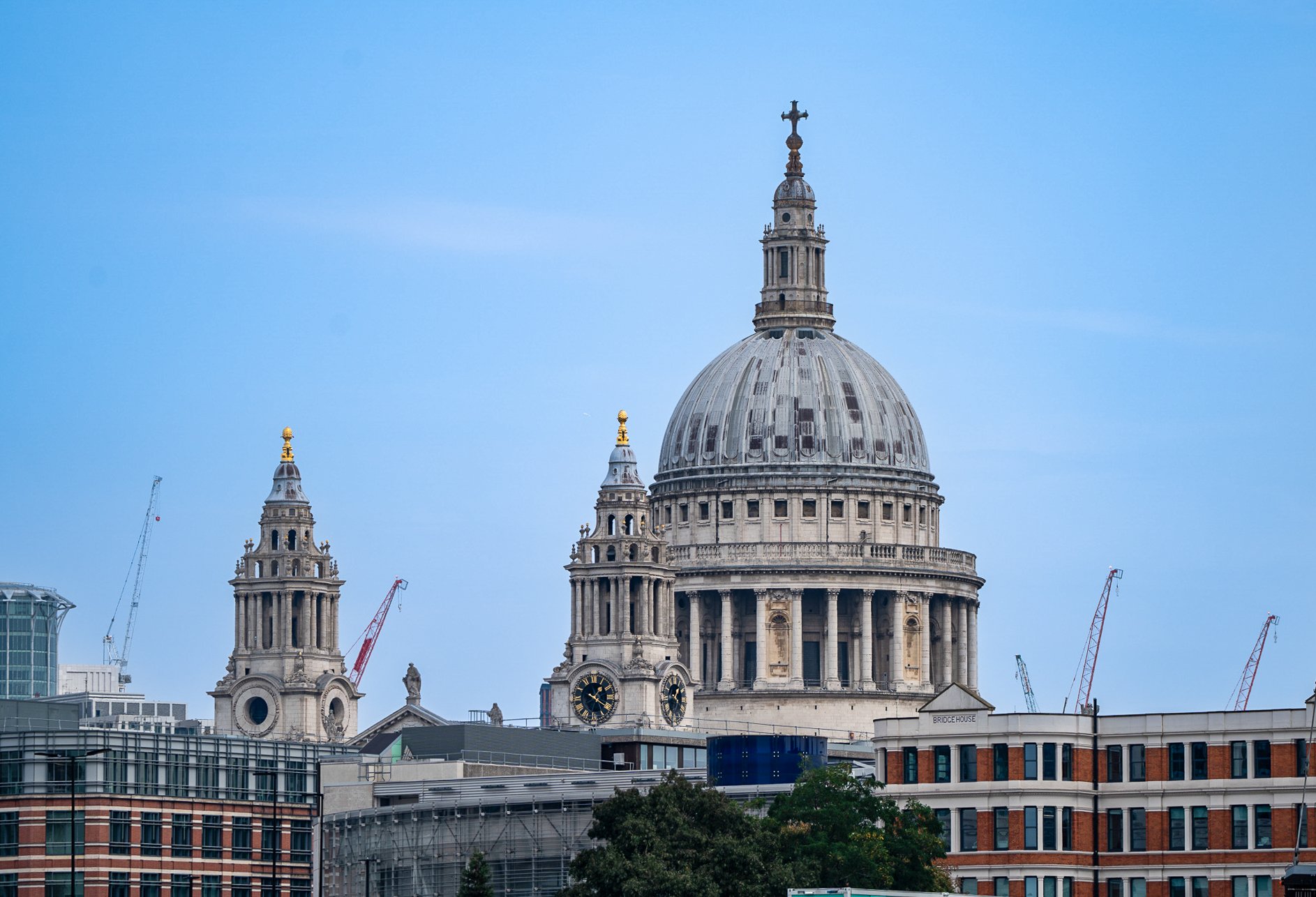
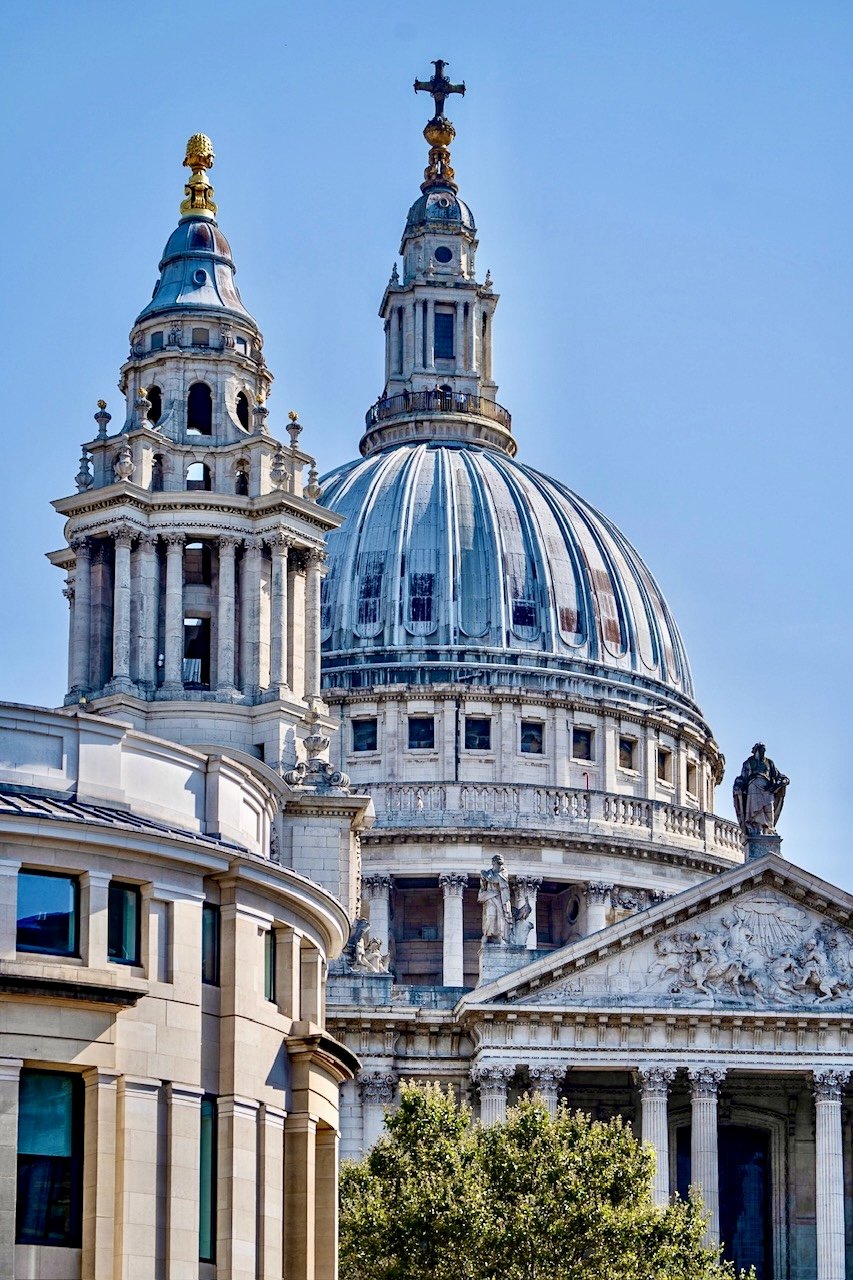
The dome of St. Paul’s Cathedral is one of the most iconic sights of the London skyline.
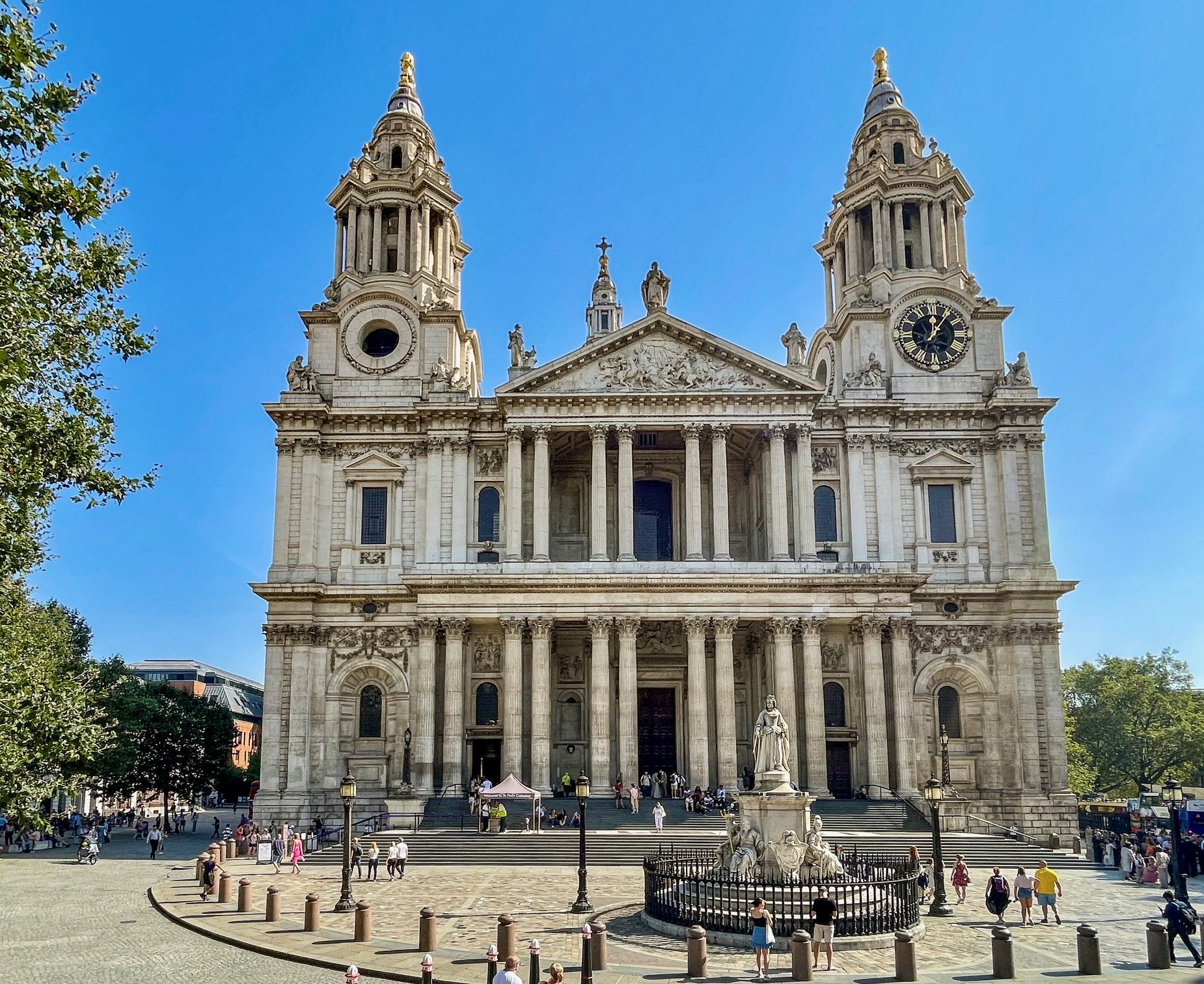
The famous cathedral atop Ludgate Hill, the fifth built on that site since St. Paul’s founding in 604 AD, was constructed after the previous church was destroyed in the Great Fire of 1666. Architect Christopher Wren (1632-1723) was appointed in 1668 to rebuild St. Paul’s after serving as an unofficial advisor to repair the deteriorating church before the fire. “Wren’s design combined Neoclassical, Gothic, and Baroque elements in an attempt to symbolize the ideals of both the English Restoration and 17th-century scientific philosophy…,” reads the Encyclopedia Britannica’s online article on St. Paul’s.
Built primarily with Portland stone, the cathedral was declared complete in 1711. The dome rose between 1697 and 1708, the year the last stone was set on the 850-ton lantern at its top. The triple dome structure consists of an outer drum made of wood and lead, an inner dome visible from the interior, and a brick cone with iron chains at its base that support the lantern.
Two pineapple-crowned bell towers frame the west facade. The southwest tower features a clock nicknamed “Big Tom'' and a geometrical staircase leading to the cathedral’s library and archives. In 1941, during the Battle of Britain, bombs hit the cathedral, and repairs were made after the war. At his death, Wren was buried in the crypt at St. Paul’s.
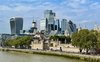
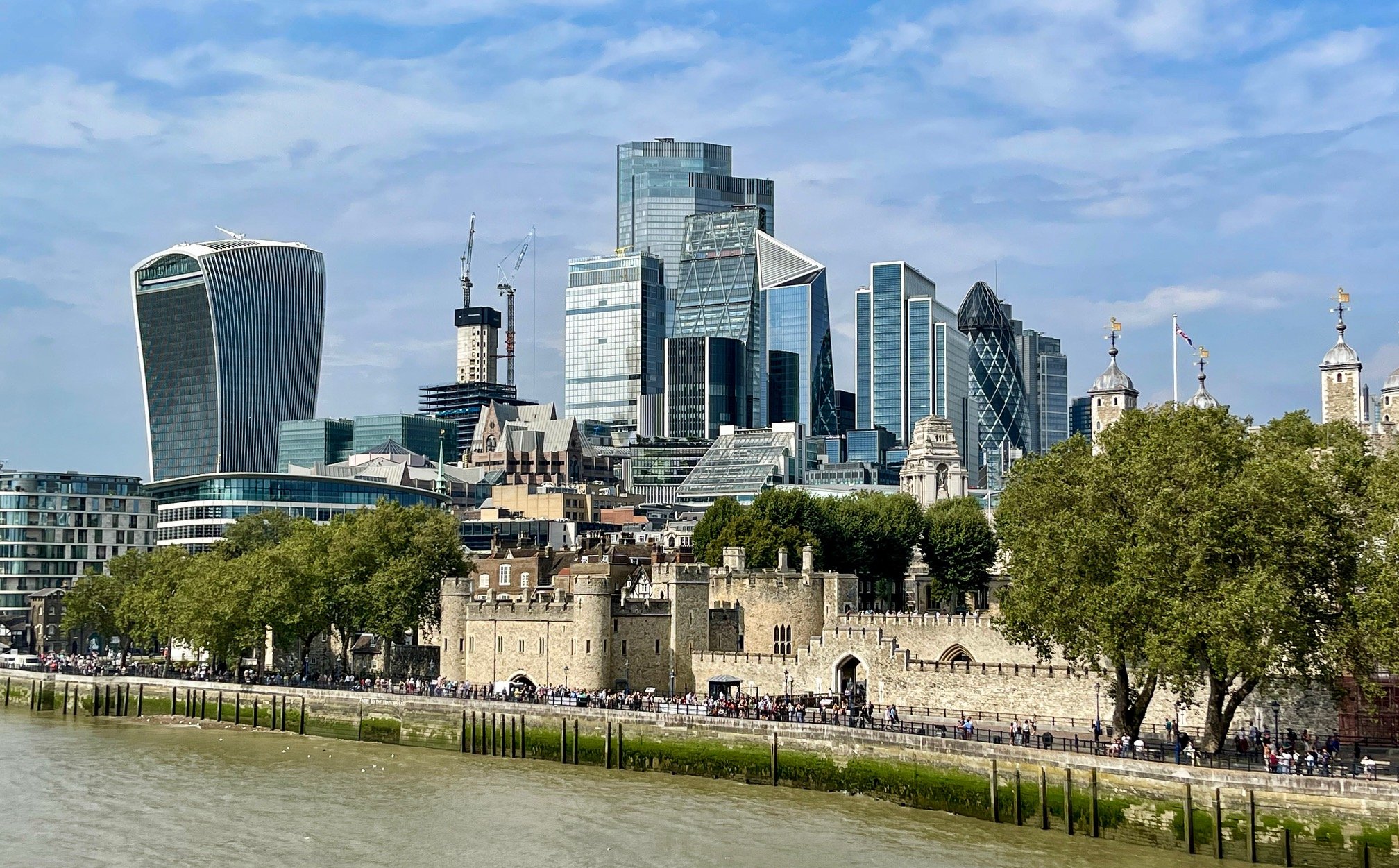
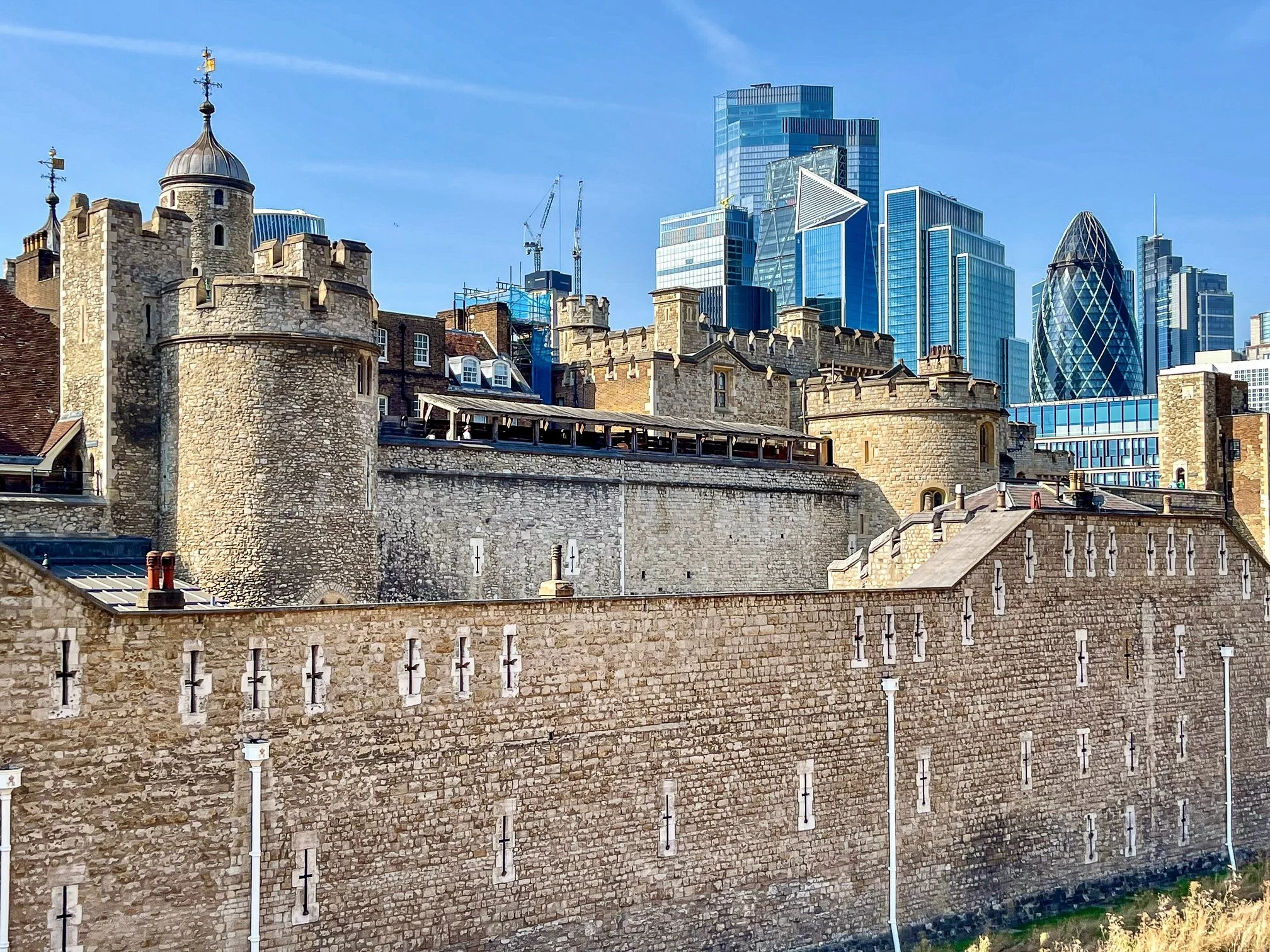
My photo of the north bank on the River Thames features the old and the new: the Tower of London, right, and a cluster of skyscrapers—among which are the Walkie Talkie (otherwise known as 20 Fenchurch Street), far left, and The Gerkin, the egg-shaped building partially obscured on the right.
William the Conqueror began building the Tower of London during the 11th century. Throughout its history the structure has served various functions, from royal fortress, palace and mint to a political prison and place of execution, as well as an arsenal and a public records office.
The Walkie Talkie is a 34-floor office building designed by Rafael Viñoly, a Uruguayan architect, which was completed in 2014. The structure is topped by the Sky Garden restaurant and bar.Designed by British architect Norman Foster and completed in 2003, The Gerkin is a steel, glass and concrete structure of 41 stories that features offices and a restaurant and bar.
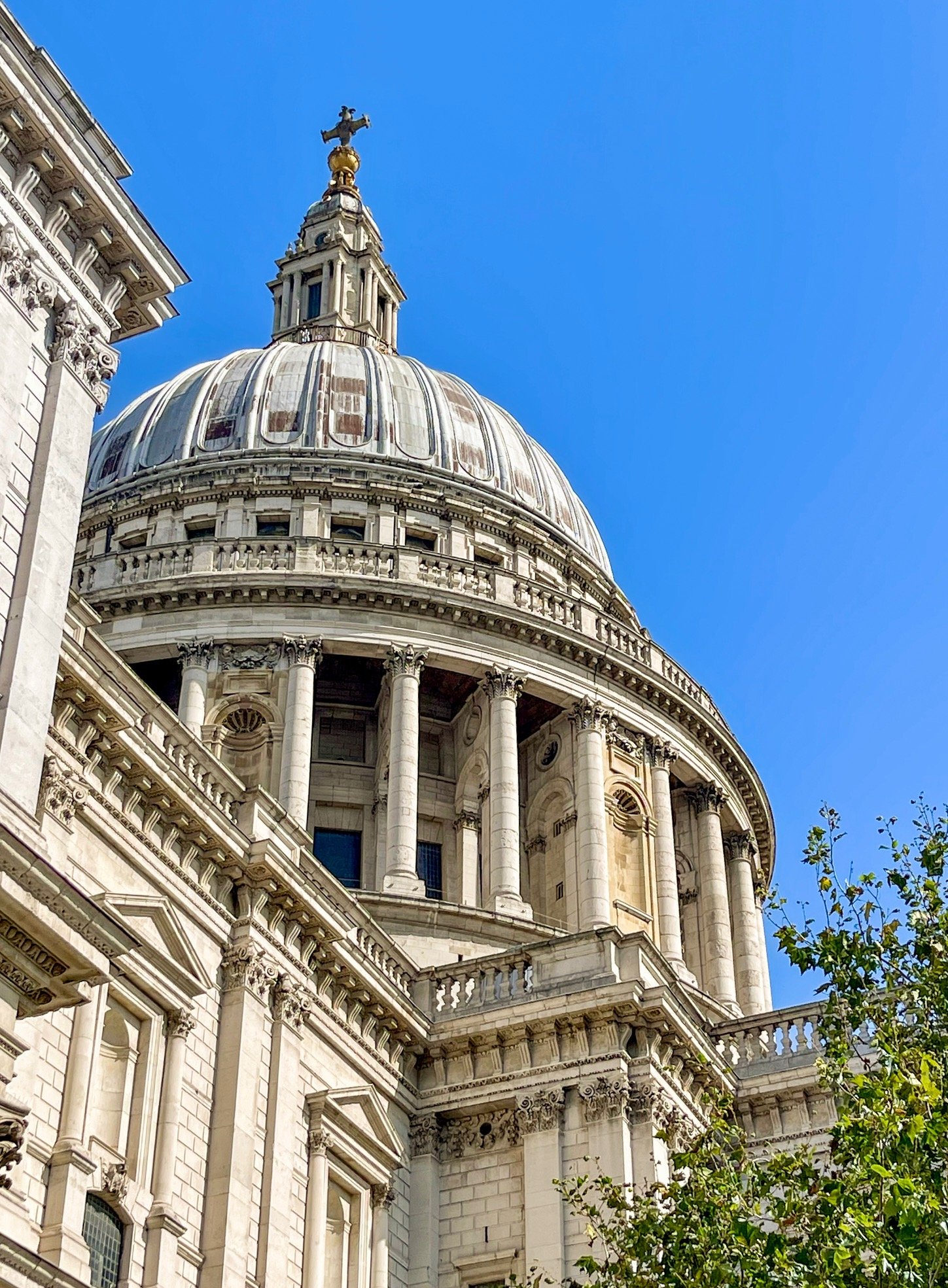
The dome of St. Paul’s Cathedral is among the most iconic sights of the London skyline.
The famous cathedral atop Ludgate Hill, the fifth built on that site since St. Paul’s founding in 604 AD, was constructed after the previous church was destroyed in the Great Fire of 1666. Architect Christopher Wren (1632-1723) was appointed to rebuild St. Paul’s in 1668 after serving as an unofficial advisor to repair the deteriorating church before the fire. “Wren’s design combined Neoclassical, Gothic, and Baroque elements in an attempt to symbolize the ideals of both the English Restoration and 17th-century scientific philosophy…,” reads the Encyclopedia Britannica’s online article on St. Paul’s.
Built primarily with Portland stone, the cathedral was declared complete in 1711. The dome rose between 1697 and 1708, the year the last stone was set on the 850-lantern at its top. The triple dome structure consists of an outer drum made of wood and lead, an inner dome visible from the interior, and a brick cone with iron chains at its base that support the lantern.
In 1941, during the Battle of Britain, bombs hit the cathedral, and repairs were made after the war. At his death, Wren was buried in the crypt of St. Paul’s.
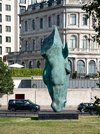
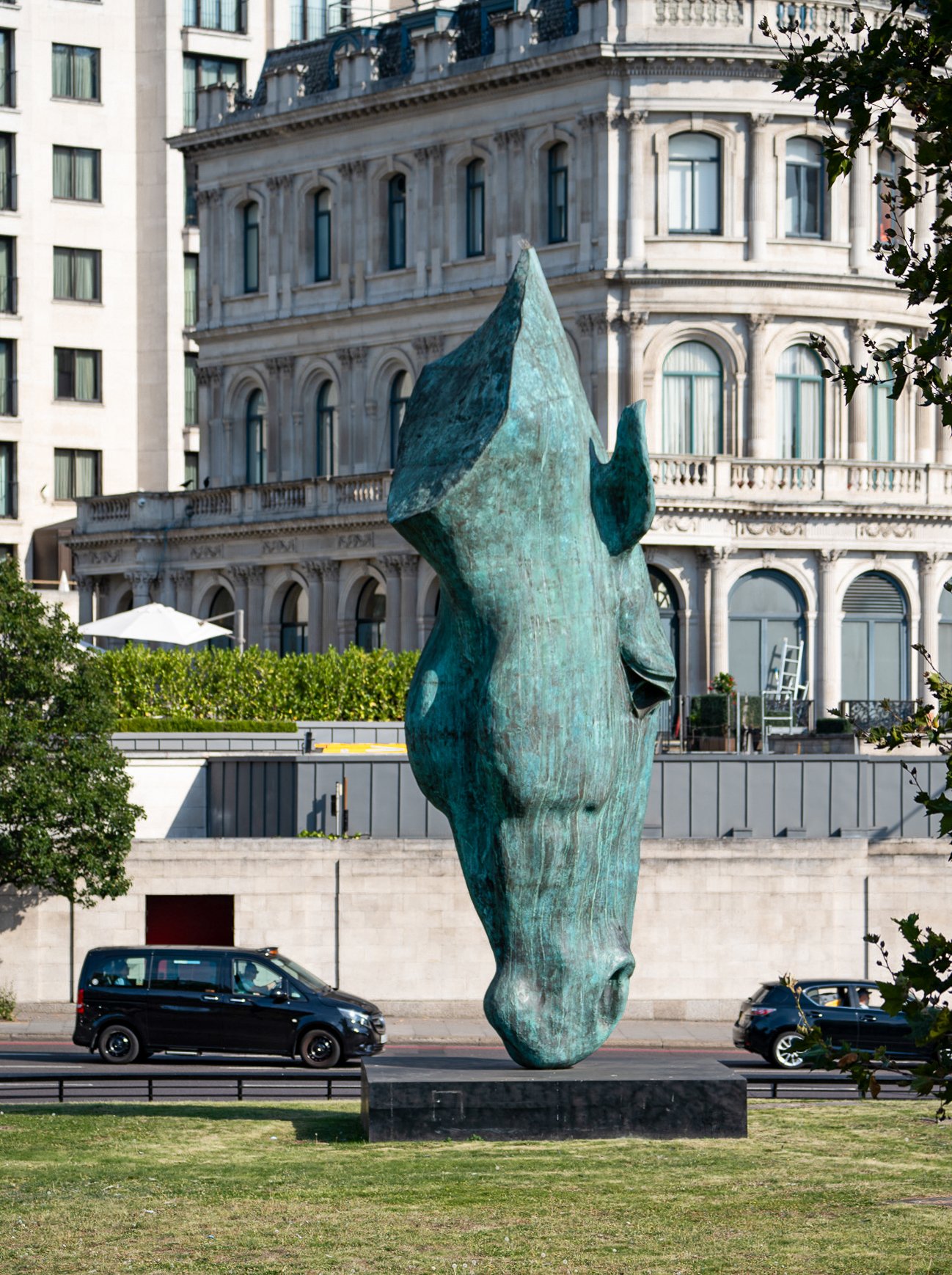
“Still Water” is a monumental bronze sculpture of a horse’s head located at Achilles Way near Hyde Park Corner in London. British artist Nic Fiddian-Green completed the 33-feet-tall sculpture in 2011 and it was installed that year at Marble Arch. The artwork was moved to its current location in 2021. I captured the horse’s head, which is lowered to drink water, just before a black cab drove by it. (Photo/Words © Joseph Kellard/kellardmedia.com)
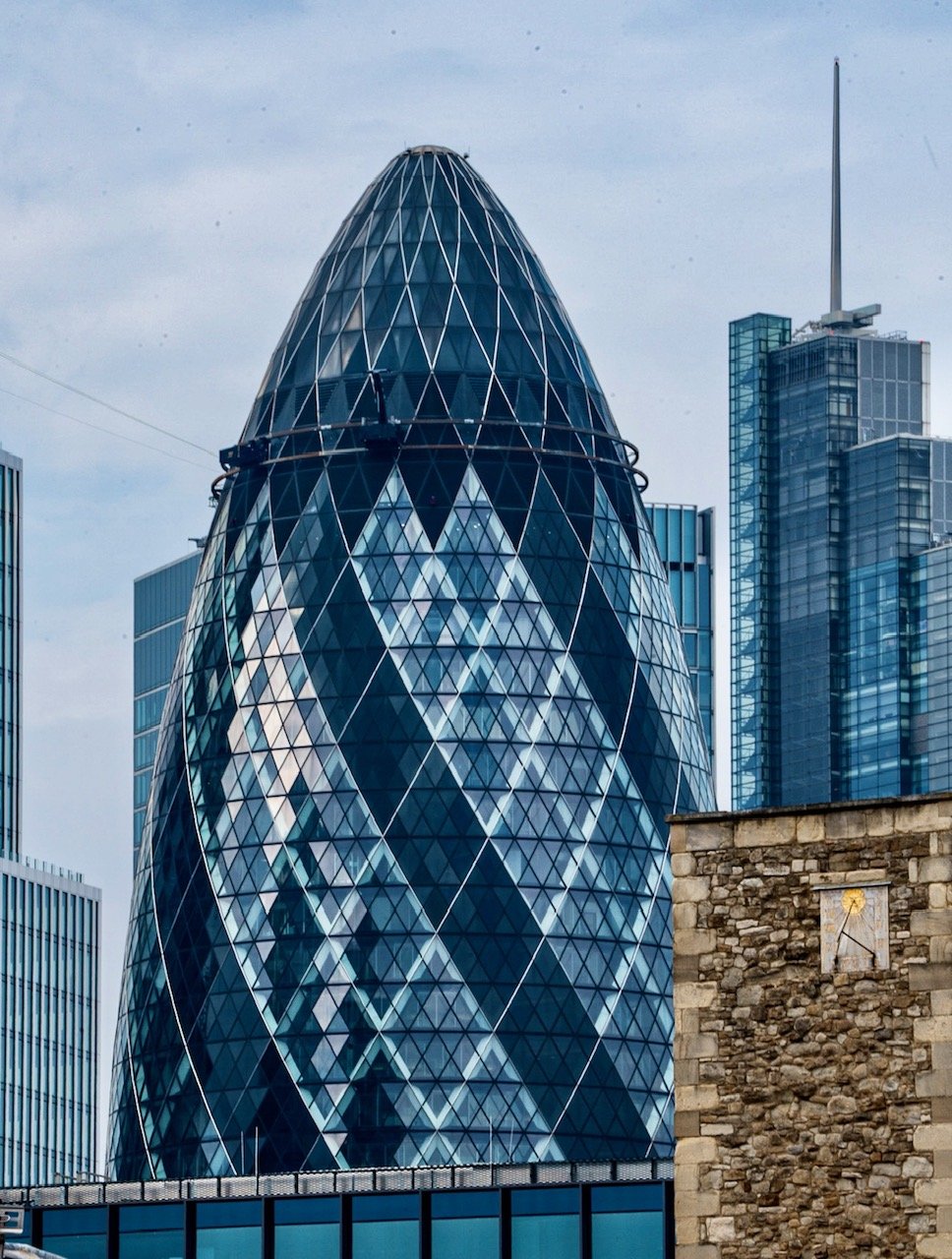
The Gherkin, designed by British architect Norman Foster, was completed in 2003. This elongated oval-shaped skyscraper is constructed of steel, glass, and concrete, and rises 41 stories into the London sky. Formerly known as the Swiss Re Building, the Gherkin houses various offices, as well as a restaurant and bar. I took these photos from various points along Tower Bridge.
While visiting London, my friend Laurie’s husband, Gethyn, took me to Golden Anchor Fish & Chips in Mitcham. Lou and Ellie Chrysostomou own the shop. As a boy, Lou cut spuds at his father and uncle’s shop The Kipper. During his teen years, he ran a fruit and vegetable stand before being offered a job at a fish and chips shop. After Lou and Ellie got married, the couple opened their first wet fish shop in Rotherhithe in 1981. Later, Lou’s relatives sold their shop to him, and he and Ellie opened Golden Anchor. When Gethyn and I bought our fish and chips from this retro shop in the middle of a residential neighborhood, we enjoyed our meals sitting on the grass in nearby Gorringe Park.
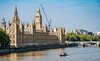
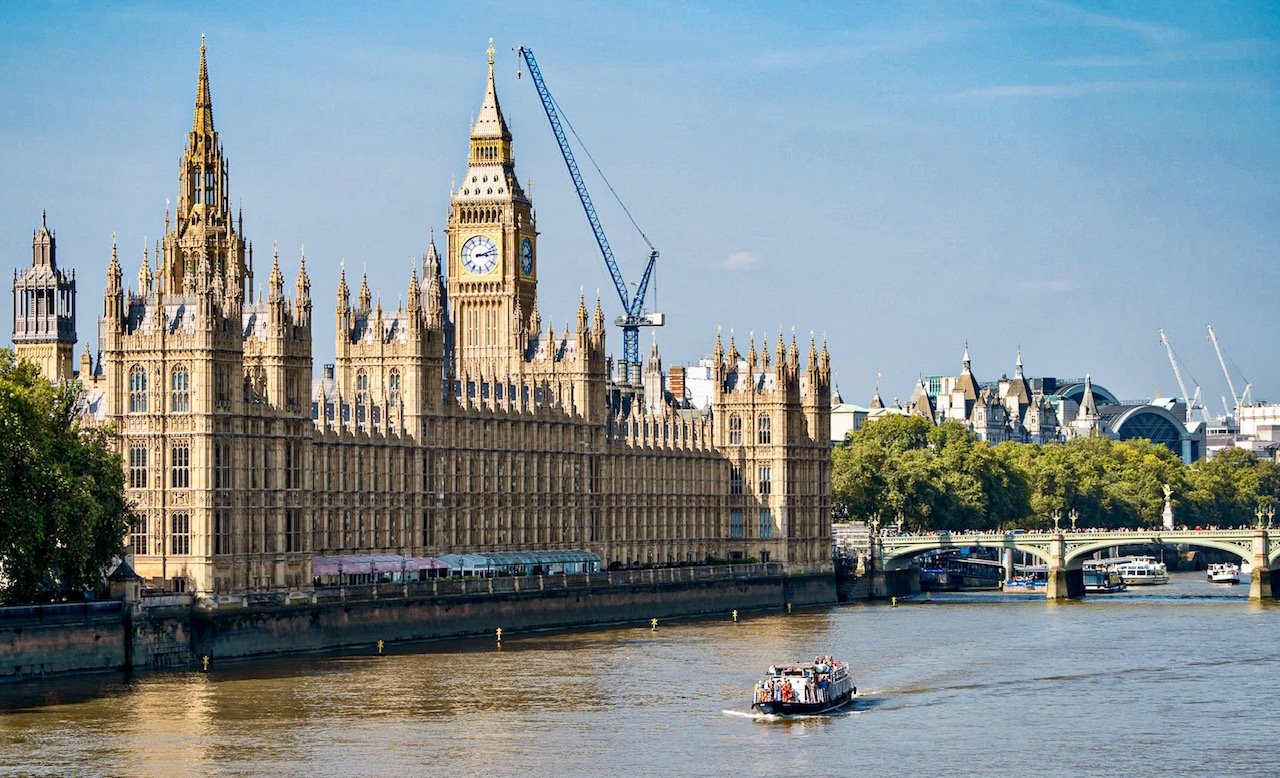
The Palace of Westminster, home to the Parliament of the United Kingdom, lines the north bank of the Thames River in London. The building is better known as the House of Parliament, where that body has met for more than 900 years. Most of the medieval part of the building was destroyed by fire in 1834, and the complex was rebuilt into the present palace between 1837 to 1860. The Westminister Bridge, in the first and third photos here, crosses the Thames.
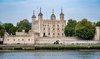
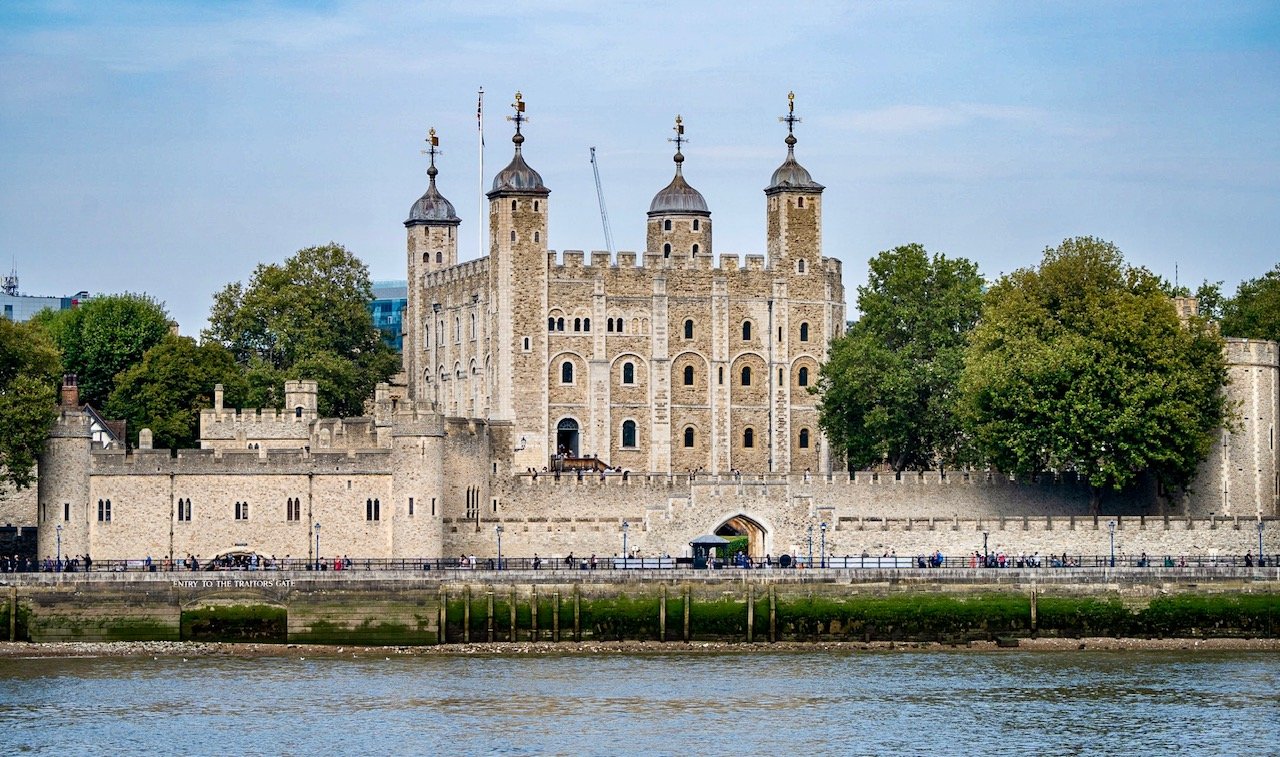
The White Tower rises from the center of the Tower of London, one of England’s most historic sites on the northbank of the River Thames. William the Conqueror broke ground on the Tower of London in 1066 and started to build the White Tower probably around 1078. The White Tower served as a keep, a fortified tower, and residence within the castle that the nobility used as a potential final refuge should an adversary breach the outer fortication. The White Tower also houses the Chapel of St. John the Evangelist, a semi-circular Romanesque-style structure also built in the 11th century. Through the centuries the Tower of London served various functions, from royal fortress, palace and mint to an arsenal, political prison and place of execution. Several people intimately or otherwise closely associated with Henry VIII were executed at the Tower of London, including Anne Boleyn (his second of six wives) and her cousin Catherine Howard, Catherine Howard (his fifth wife), Lady Jane Grey (his niece), Thomas More (his Lord High Chancellor), Thomas Cromwell (his chief minister), Cardinal John Fisher (a Catholic who refused to accept him as head of the Church of England) and Thomas Seymour (the brother of his third wife, Jane Seymour).Today the Tower of London is a museum and the White Tower houses the Royal Armouries collection of arms and armours that includes those of Henry VIII, Charles I and James II.
The dome of St. Paul’s Cathedral is among the most iconic sights of the London skyline.
The famous cathedral atop Ludgate Hill, the fifth built on that site since St. Paul’s founding in 604 AD, was constructed after the previous church was destroyed in the Great Fire of 1666. Architect Christopher Wren (1632-1723) was appointed to rebuild St. Paul’s in 1668 after serving as an unofficial advisor to repair the deteriorating church before the fire. “Wren’s design combined Neoclassical, Gothic, and Baroque elements in an attempt to symbolize the ideals of both the English Restoration and 17th-century scientific philosophy…,” reads the Encyclopedia Britannica’s online article on St. Paul’s.
Built primarily with Portland stone, the cathedral was declared complete in 1711. The dome rose between 1697 and 1708, the year the last stone was set on the 850-lantern at its top. The triple dome structure consists of an outer drum made of wood and lead, an inner dome visible from the interior, and a brick cone with iron chains at its base that support the lantern.
In 1941, during the Battle of Britain, bombs hit the cathedral, and repairs were made after the war. At his death, Wren was buried in the crypt of St. Paul’s.
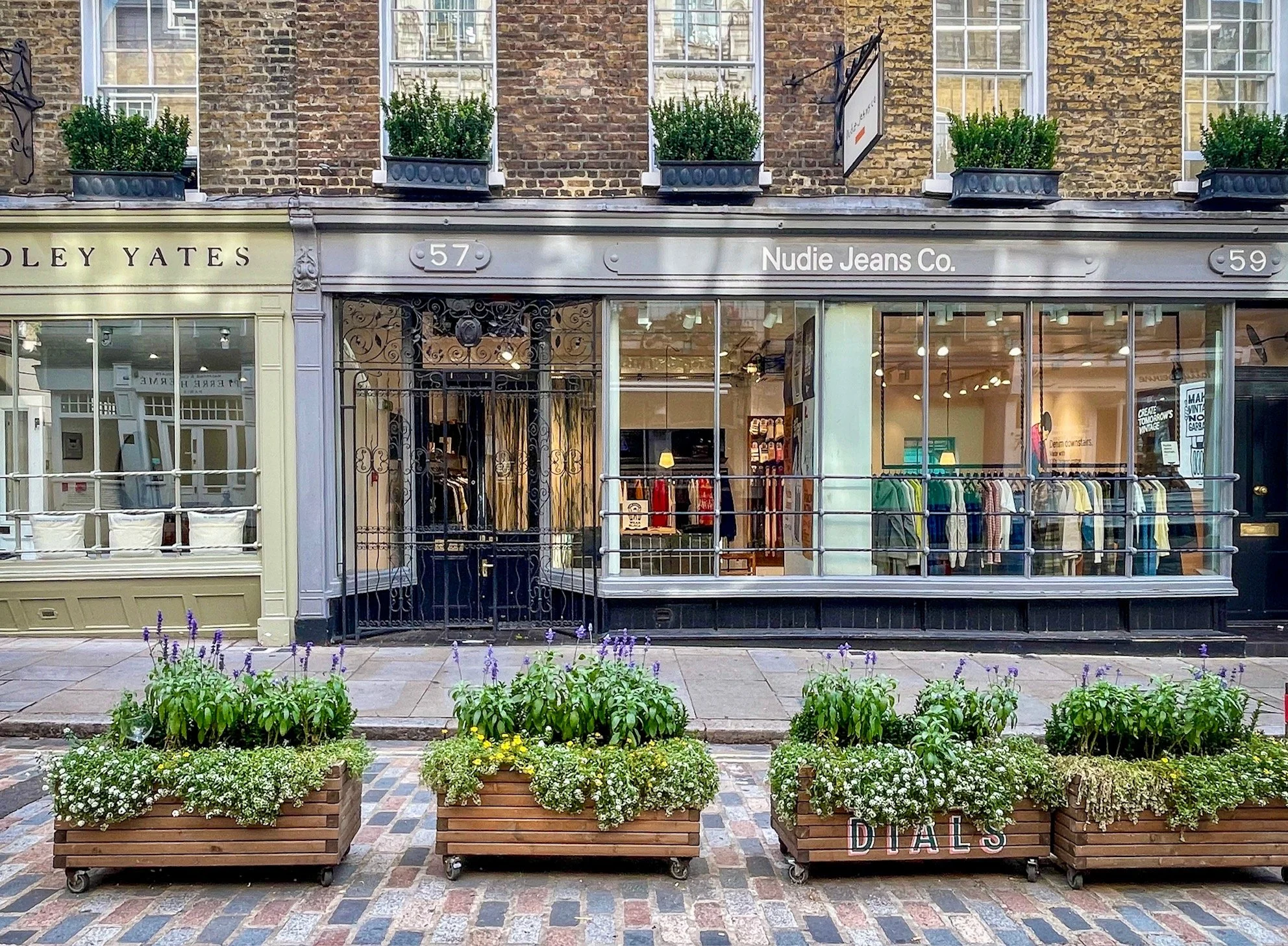
Nudie Jeans store is on Monmouth Street in London’s historic Seven Dials district. Founded in Gothenburg, Sweden in 2001 by Maria Erixon Levin and Joakim Levin, the organic cotton denim brand was “fueled by a love for dry denim, punk music, and snus,” reads the company’s website. Since 2007, Nudie has offered free repairs to create “forever jeans”—built to last a lifetime rather than end up in the trashcan. Seven Dials is a star-shaped street grid wherein seven streets converge around a central column in Covent Garden, a shopping, dining and entertainment district in London’s West End. The street layout was designed by Thomas Neale in the 17th century.
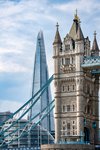
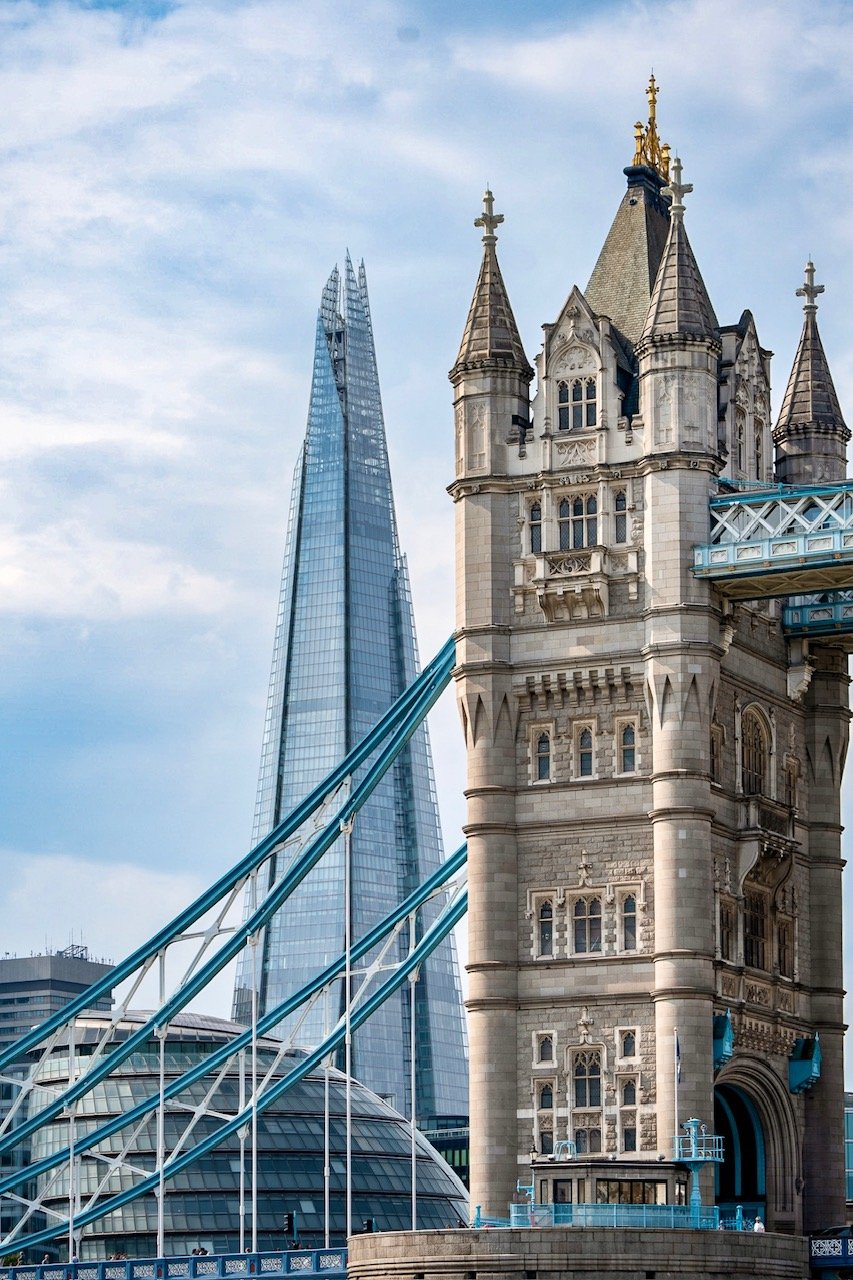
The south tower of the Tower Bridge and the Shard, the tallest skyscraper in London.
A view of Tower Bridge from Potters Field Park on the South Bank of the River Thames in London. The bridge was built in eight years and opened in 1894. The original steam-powered engines still lift the bridge’s roadway, or bascules that each weigh 1,000 tons, allowing tall ships to pass through on the river.
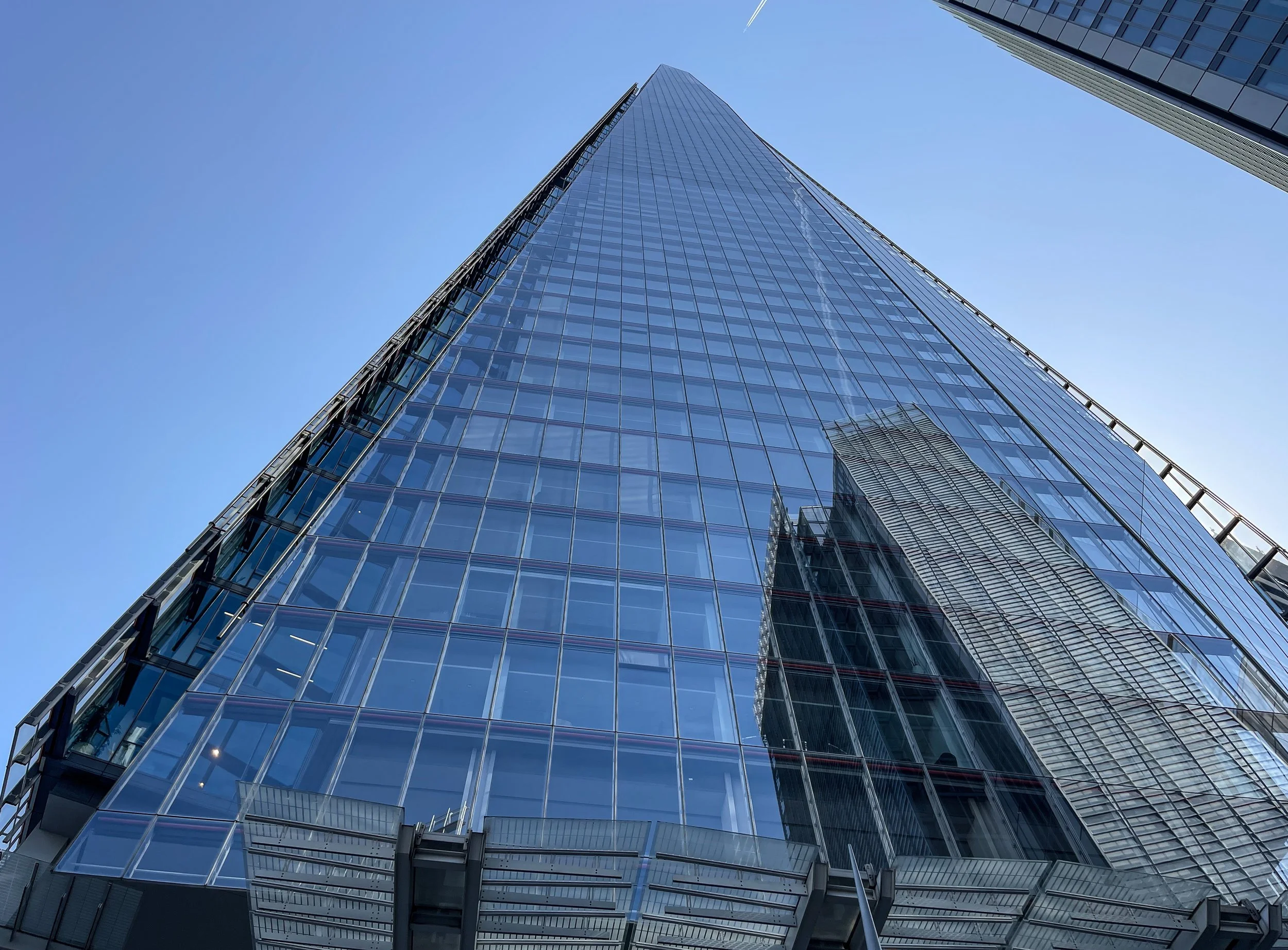
The Shard reflects a neighboring building as an airplane flies overhead. Designed by architect Renzo Piano, the tallest skyscraper in London was constructed between 2009 and 2012. It is 1,020 feet high and houses offices, bars, restaurants and hotels. Among Piano’s other designs are the the Whitney Museum of American Art in New York City (2015) and and Stavros Niarchos Foundation Cultural Center in Athens (2016).
Westminster Bridge spans the Thames, connecting Westminster near the Palace of Westminster to Lambeth. Opened in 1862, it replaced the original 1750 structure. Its verdigris green paint, matching the House of Commons’ leather seats, was restored during the 2005-2007 refurbishment.The London Eye, a 443-foot observation wheel on the South Bank, opened in 2000. It’s the world’s largest cantilevered observation wheel and the UK’s most popular paid visitor attraction.
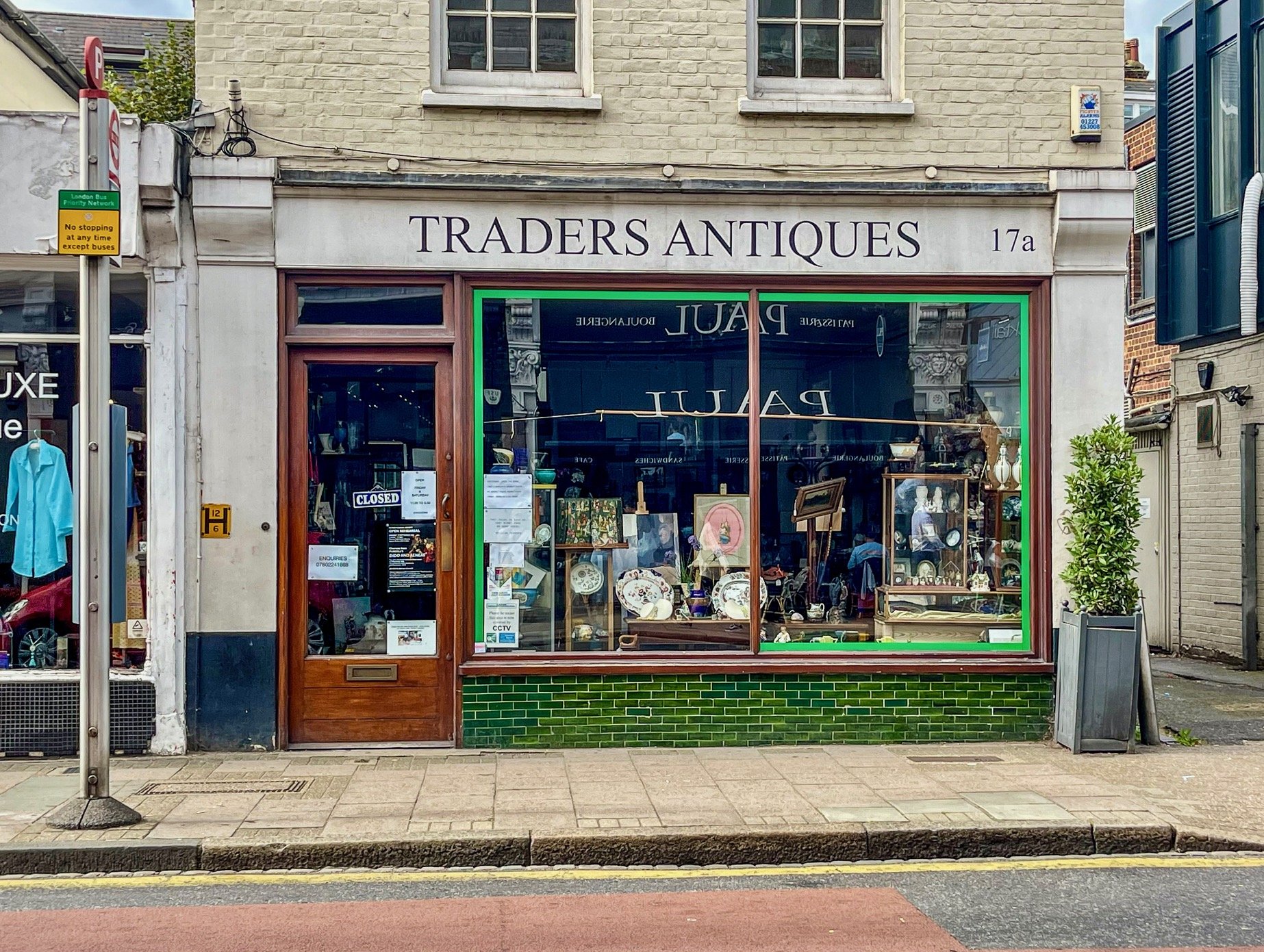
Traders Antiques is one of the charming storefronts in Wimbledon Village in London. The shop specializes in vintage furniture, particularly traditional 18th- and 19th-century English items, as well as china, glass, jewelry and paintings.
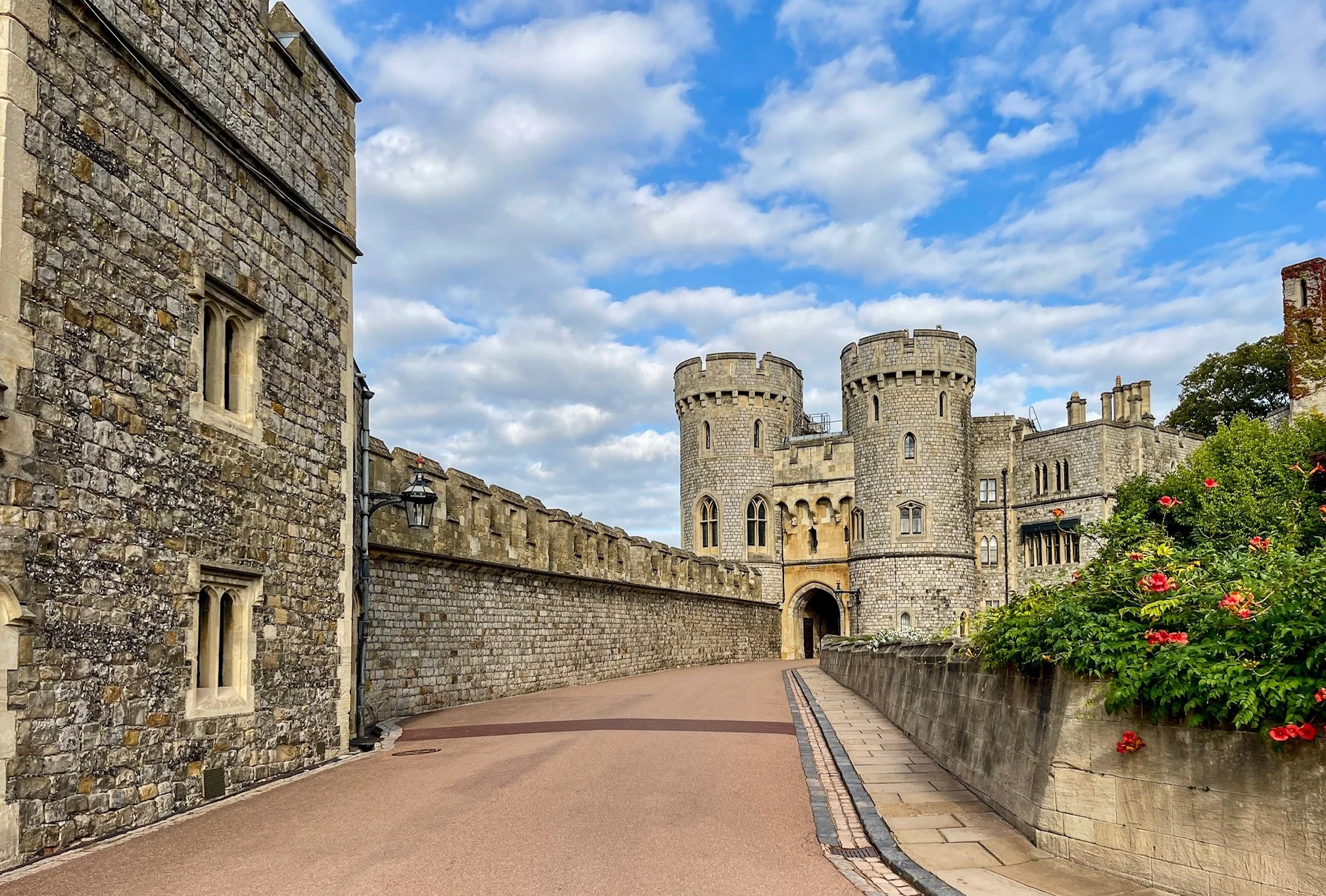
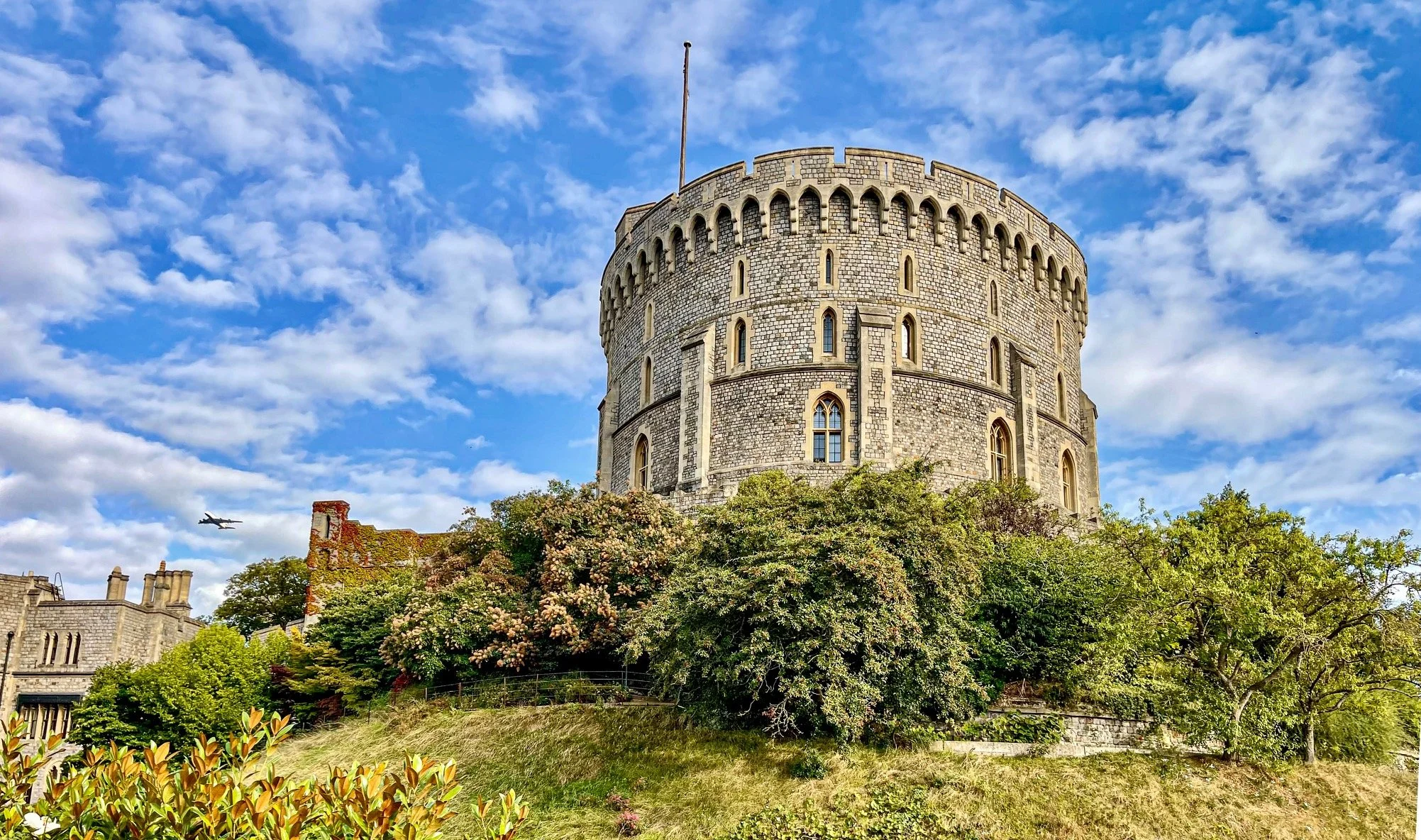
Windsor Castle in London has been home to British royalty for nearly 1,000 years, making it the longest-occupied palace in Europe and the world’s oldest inhabited castle. What started as William the Conqueror’s wooden fortress around 1070 has been transformed over the centuries into a stunning Gothic palace.This is the area where I walked on the castle grounds to the library that houses hundreds of sheets of drawings by Leonardo da Vinci.
Windsor Castle in London has been home to British royalty for nearly 1,000 years, making it the longest-occupied palace in Europe and the world’s oldest inhabited castle. What started as William the Conqueror’s wooden fortress around 1070 has been transformed over the centuries into a stunning Gothic palace.This is the area where I walked on the castle grounds to the library that houses hundreds of sheets of drawings by Leonardo da Vinci.
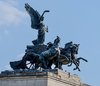
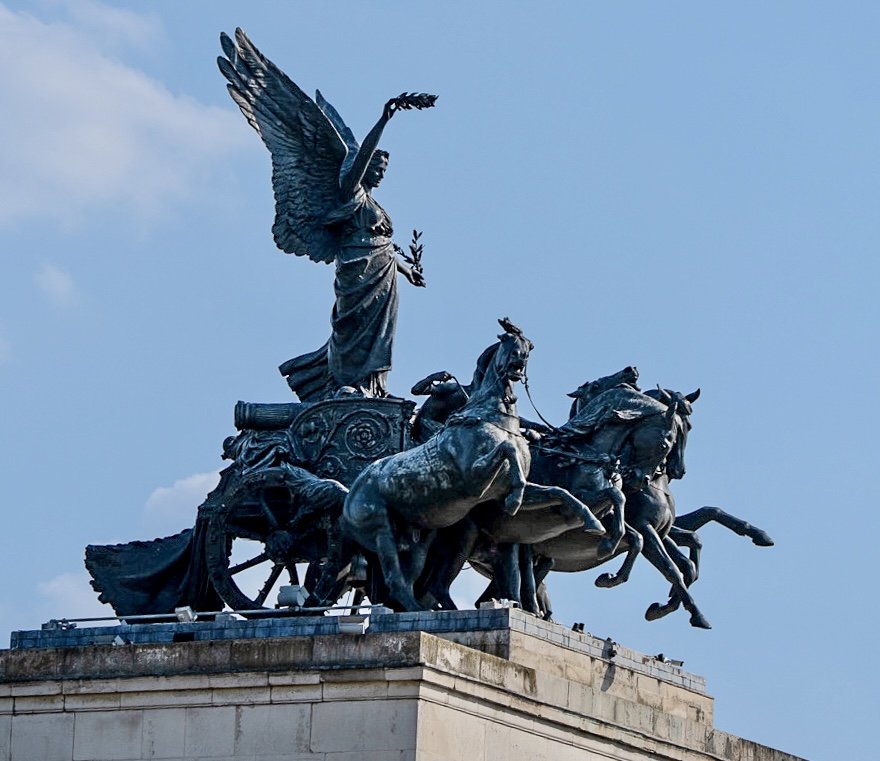
“Peace descending on the Quadriga of War '' – the largest bronze statue in Europe – crowns the Wellington Arch at Hyde Park in London.Created by Adrian Jones, the allegorical sculpture features a four-horse chariot (or quadriga) and Nike, the winged Greek goddess of victory, who holds a laurel wreath, the classical symbol of victory.The Wellington Arch was designed by architect Decimus Burton and constructed between 1826 - 1830 to commemorate Britain's victory in the Napoleonic Wars. Originally, the triumphal arch featured Matthew Cotes Wyatt’s colossal bronze equestrian statue of the 1st Duke of Wellington, who defeated Napoleon at Waterloo in 1815, from which the arch took its name. But Jones’ Quadriga replaced Wyatt’s statue, which stood 28 feet high and weighed 40 tons, the largest equestrian figure ever created.(Words and Photo: © Joseph Kellard/kellardmedia.com)
Standing at 68 King William Street, this building once housed a House of Fraser department store—part of the British retail organization that began in Glasgow during 1849. Its prime position along King William Street, which provides direct access to London Bridge, has given the structure its notable title as the “Gateway to the City.” From this vantage point, observers can witness the steady flow of pedestrians and vehicles making their way across the River Thames.The London Bridge in its modern concrete and steel construction was completed in 1973. It continues a legacy of river crossings at this location that stretches back nearly two millennia to approximately 50 AD, when Romans first established a bridge there. As a crucial transportation artery, it links the historic City of London with the borough of Southwark, maintaining its role as one of the capital’s most important Thames crossings.
I took this photo of the Tower of London and the City of London skyline while crossing the Tower Bridge. William the Conqueror started to construct the Tower of London in 1066, with the inner White Tower likely beginning around 1078. Over the centuries, the Tower has served various roles, including a royal fortress, palace, mint, arsenal, prison, and site of executions. Notable executions included Anne Boleyn and Catherine Howard, wives of Henry VIII, Lady Jane Grey, and officials like Thomas More and Thomas Cromwell. Today, it is a museum, with the White Tower housing the Royal Armouries collection, which features arms and armor of figures such as Henry VIII, Charles I, and James II.
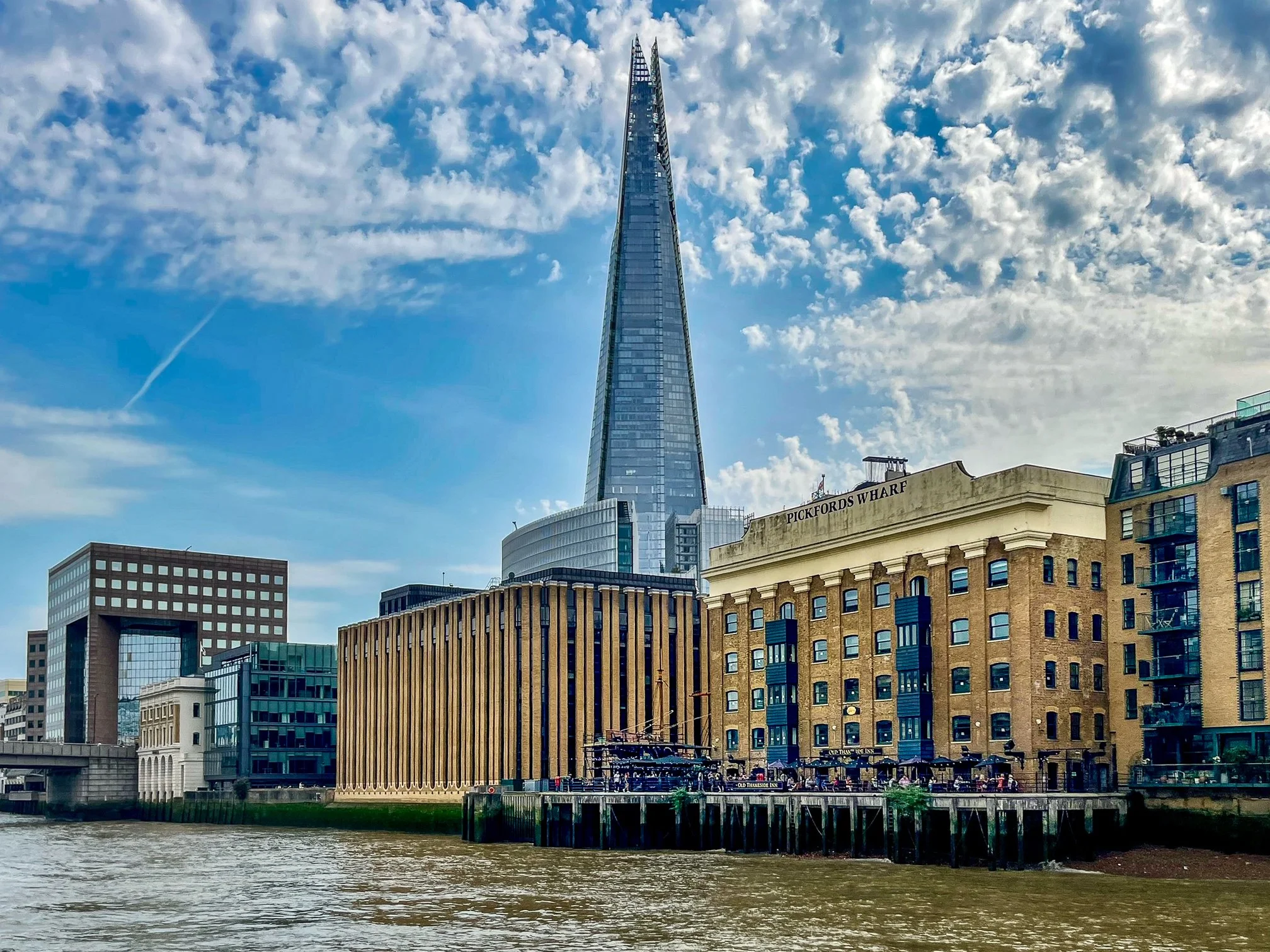
The Shard soars over Pickfords Wharf along the south bank of the River Thames. Originally built by Fitch & Cozens as Phoenix Wharf, this historic riverside building once stored everything from canned goods and sugar to dried fruit. After Pickfords & Co acquired the property in 1897, the building took on its current name, though the original structure was considerably demolished in the 1980s.In striking contrast to its historic surroundings, the Shard was designed by Renzo Piano and constructed between 2009 and 2012. This gleaming modern skyscraper houses offices, bars, restaurants, and hotels while soaring 1,020 feet into the London sky—making it the tallest building in the United Kingdom.
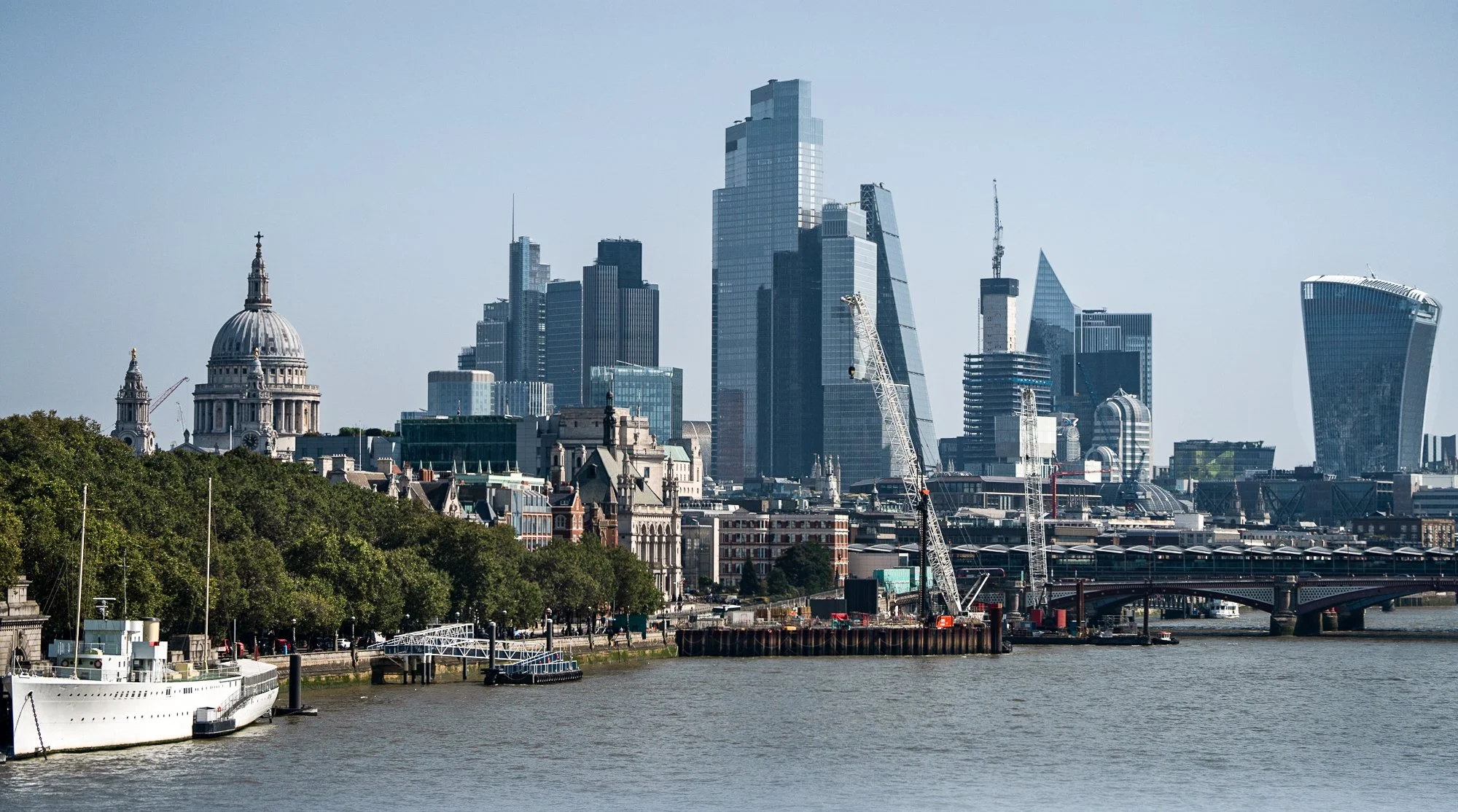
At the center of this photo I took of the City of London skyline stands The Leadenhall Building, the skyscraper with the diamond facade grate on the left, and The Scalpel, with its slanted rooftop top, on the right.The Leadenhall Building earned the nickname “Cheesegrater” from its distinctive slanted facade, wherein each floor is designed to be slightly narrower than the one below. This 737-foot, 52-story skyscraper was designed by Graham Stirk of Rogers Stirk Harbour + Partners, in part to preserve sightlines to St. Paul’s Cathedral’s dome. Construction was completed in 2014.Rising 620 feet or 38 stories, The Scalpel was designed by Kohn Pedersen Fox and completed in 2018. This commercial tower gets its moniker from the distinctive angular fold line running along its inclined northern facade. Located at 52 Lime St. in the heart of London’s financial district, The Scalpel serves as the European headquarters for insurance company W.R. Berkley while providing office space for additional tenants.
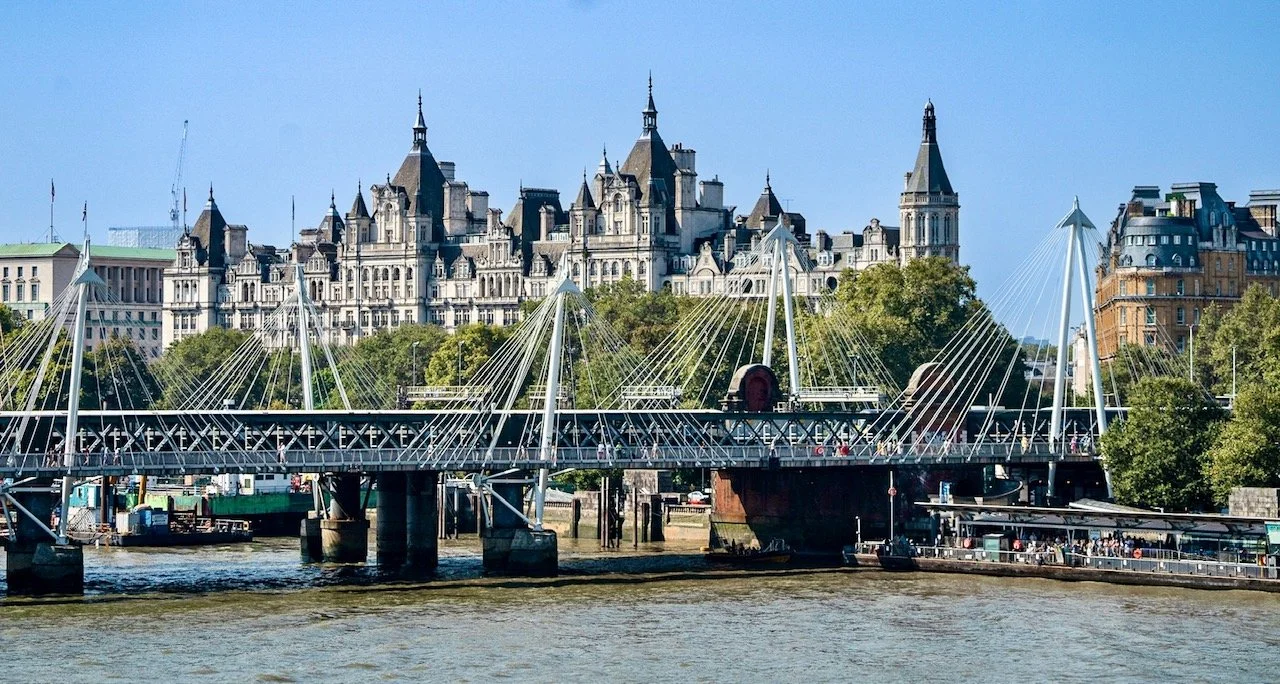
The Hungerford Bridge and Golden Jubilee Bridges on the River Thames form an integrated bridge system on the River Thames in London. At the center stands the original Hungerford Bridge, a railway span designed by Isambard Kingdom Brunel that initially opened as a suspension footbridge in 1845. Flanking this historic structure are two modern cable-stayed pedestrian bridges known as the Golden Jubilee Bridges, whose exposed cables create notable networks rising from steel pylons. These twin footbridges, each 13 feet wide, were designed by architects Lifschutz Davidson Sandilands and engineers WSP Group, opening to the public in 2002. The historic Hungerford Bridge underwent a comprehensive three-year refurbishment beginning in 2025, further enhancing this remarkable bridge complex.
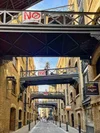
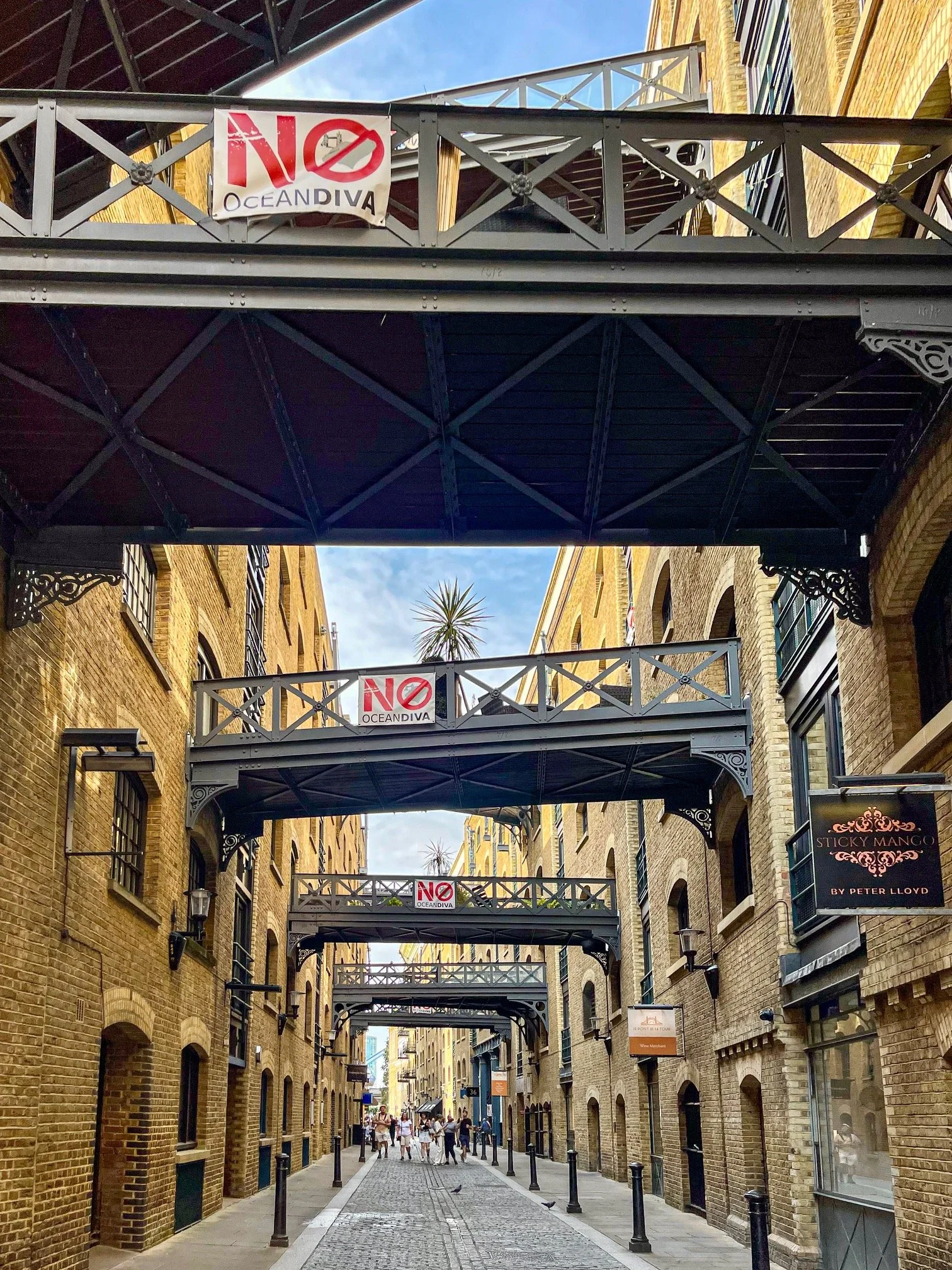
When I walked through this area I had no idea of its history but could sense something notable about it. Known as Shad Thames, these tall brick buildings were once warehouses that stored vast quantities of coffee, tea and spices, and were connected by these dramatic overhead walkways above the cobblestone street. Starting in the late 20th century, the warehouses were renovated into s apartments, restaurants, bars and shops, blending London’s industrial heritage with modern city living. I discovered this district while walking along the River Thames to photograph the nearby Tower Bridge from a distance.
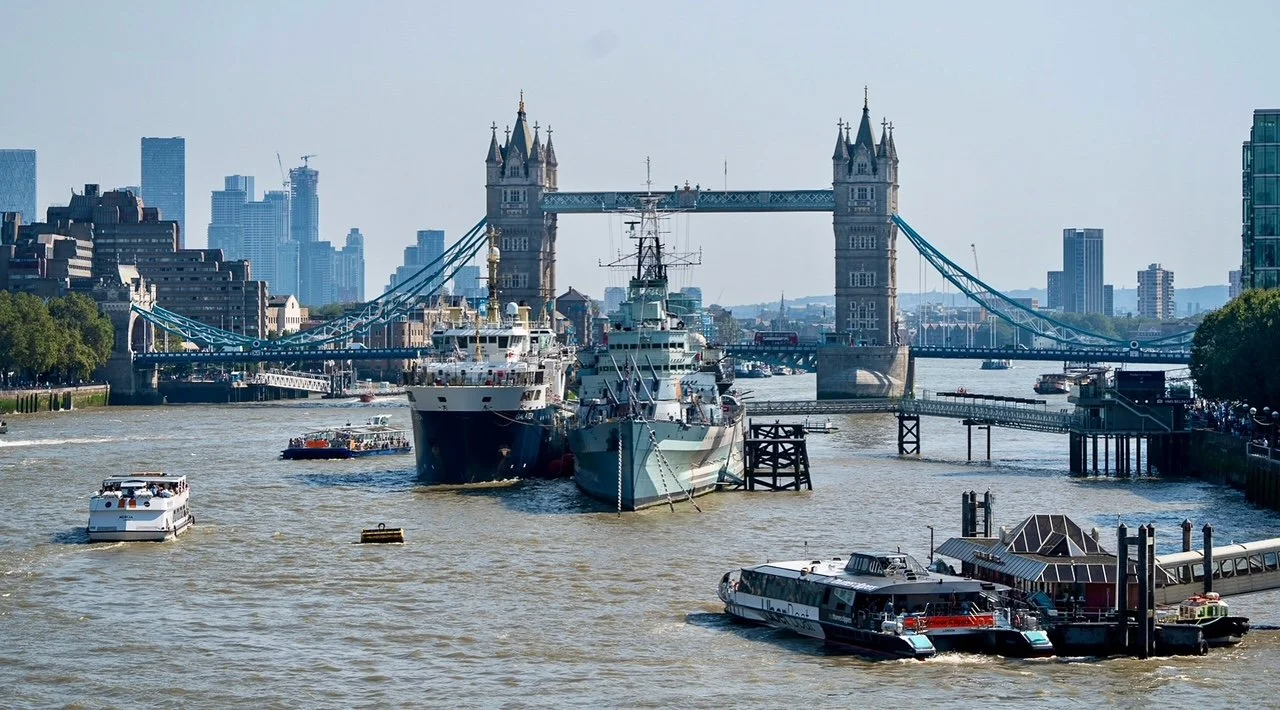
The HMS Belfast, right, is permanently moored on the River Thames near Tower Bridge. This warship was employed in World War II and the Korean War before becoming a museum operated by the Imperial War Museums.On the left is the THV Galatea, a multi-functional ship primarily used to maintain navigational aids such as lighthouses and buoys along the coasts of England, Wales, the Channel Islands and Gibraltar. The vessel is equipped for diverse maritime operations including hydrographic surveying and towing, and deploying scientific equipment. Among its advanced features are a helicopter landing pad, 30-tonne crane, dynamic positioning system and high-speed workboat.
************************************
(Photo/Words © Joseph
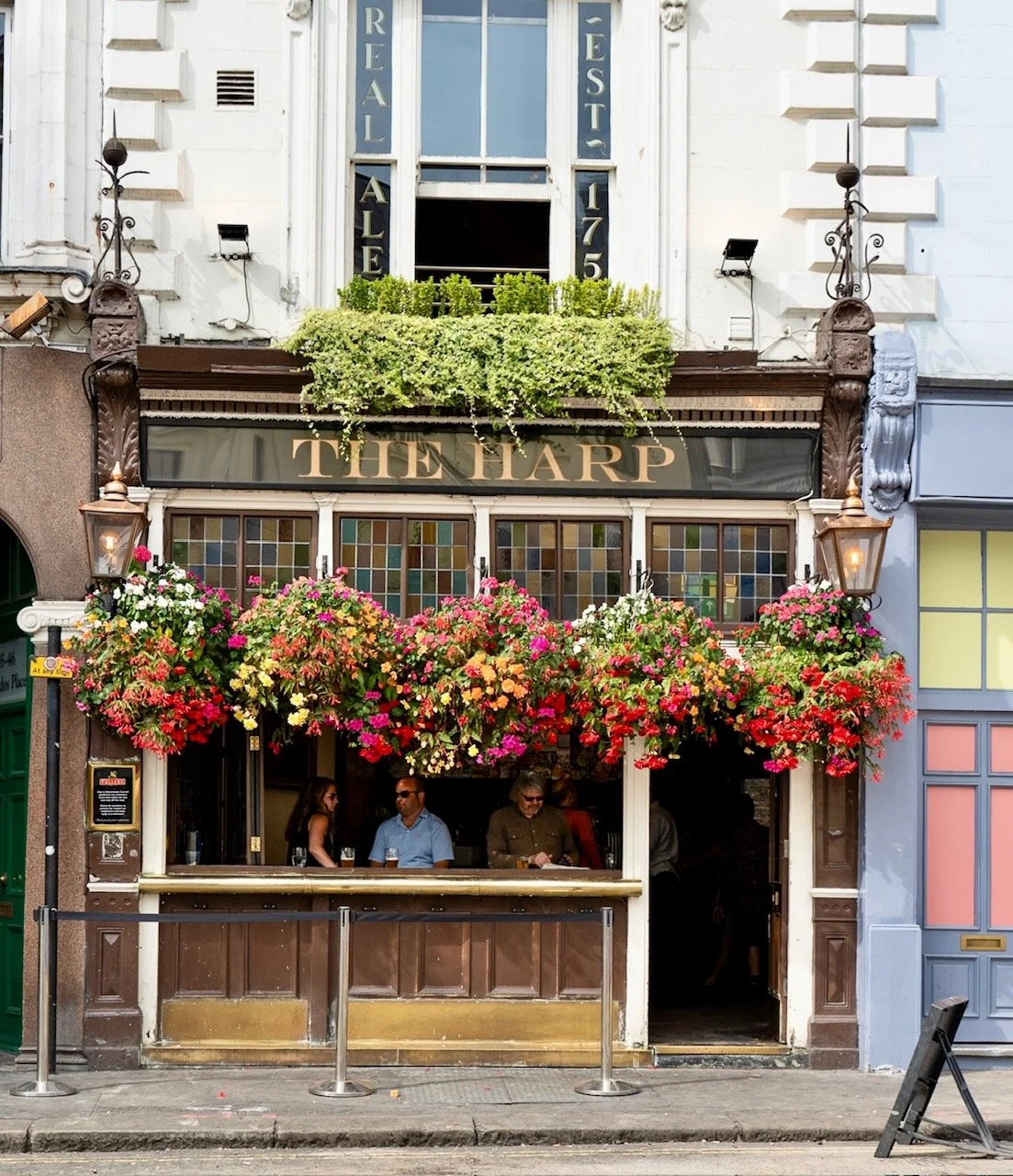
The Harp in London’s Covent Garden is a historic public house beloved by ale enthusiasts. The site has served London since the 17th century, when tradespeople conducted business there. Originally known as The Welsh Harp, this West End gem was renamed simply The Harp in the mid-1990s. Today, it is celebrated for exceptional ales and an impressive selection of traditional British ciders and perries. “It’s always busy but maintains an intimacy and has a genuine London buzz where tourists mix happily with hardened regulars,” writes one pub enthusiast.The Harp made history in 2010 as the first London pub to receive the Campaign for Real Ale’s “National Pub of the Year” award, one among numerous other CAMRA honors.
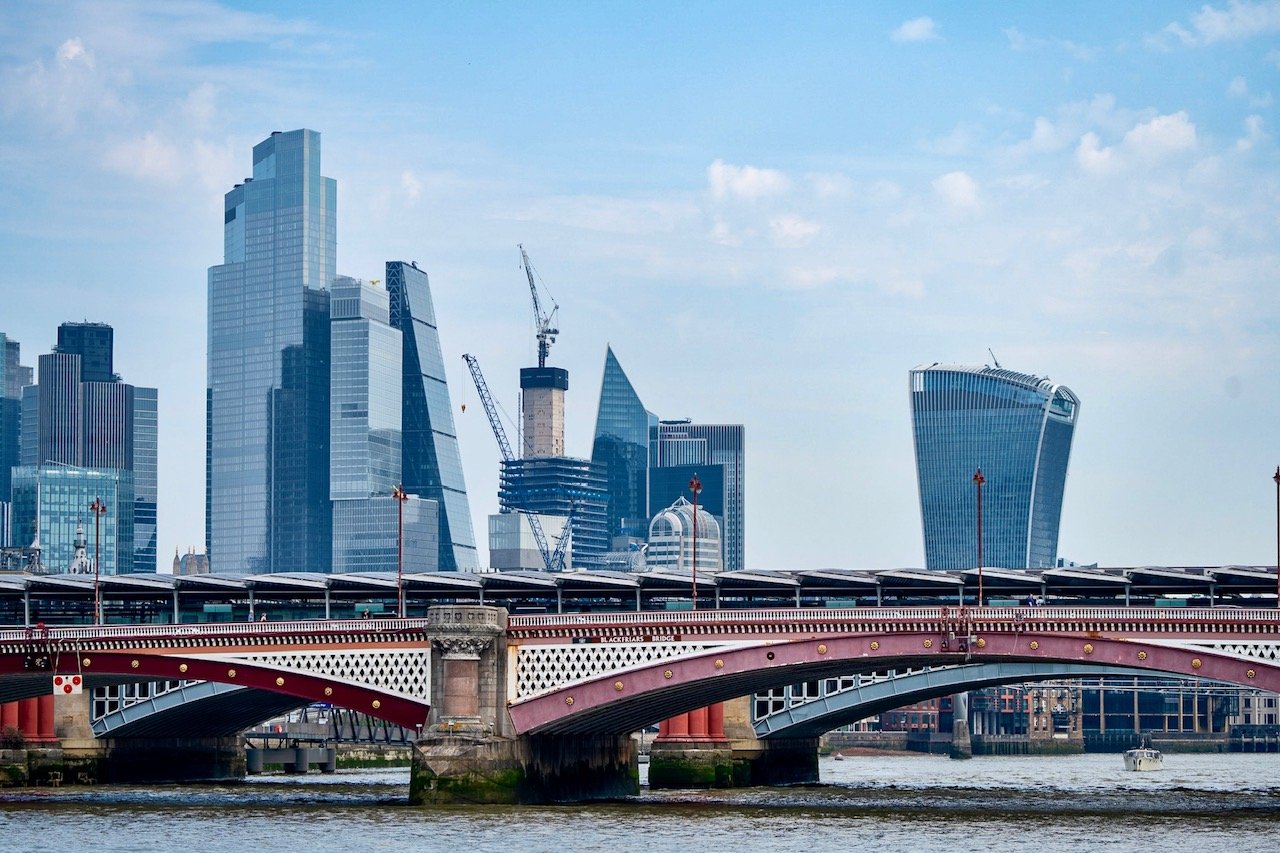
The City of London skyline overlooks Blackfriars Bridge on the River Thames. This bridge links the City of London to the London Borough of Southwark. The span opened in the 1860s, replacing an older bridge dismantled in the same decade. Civil engineer Joseph Cubitt designed the bridge that reaches 923 feet, with five wrought iron arches, across the river.
info
/
1
2
3
4
5
6
7
8
9
10
11
12
13
14
15
16
17
18
19
20
21
22
23
24
25
26
27
28
29
30
31
32
33
34
35
36
37
38
39
40
41
42
43
44
45
46
47
48
49
50
51
·
·
·
·
·
·
·
·
·
·
·
·
·
·
·
·
·
·
·
·
·
·
·
·
·
·
·
·
·
·
·
·
·
·
·
·
·
·
·
·
·
·
·
·
·
·
·
·
·
·
·